Address
304 North Cardinal St.
Dorchester Center, MA 02124
Work Hours
Monday to Friday: 7AM - 7PM
Weekend: 10AM - 5PM
Address
304 North Cardinal St.
Dorchester Center, MA 02124
Work Hours
Monday to Friday: 7AM - 7PM
Weekend: 10AM - 5PM

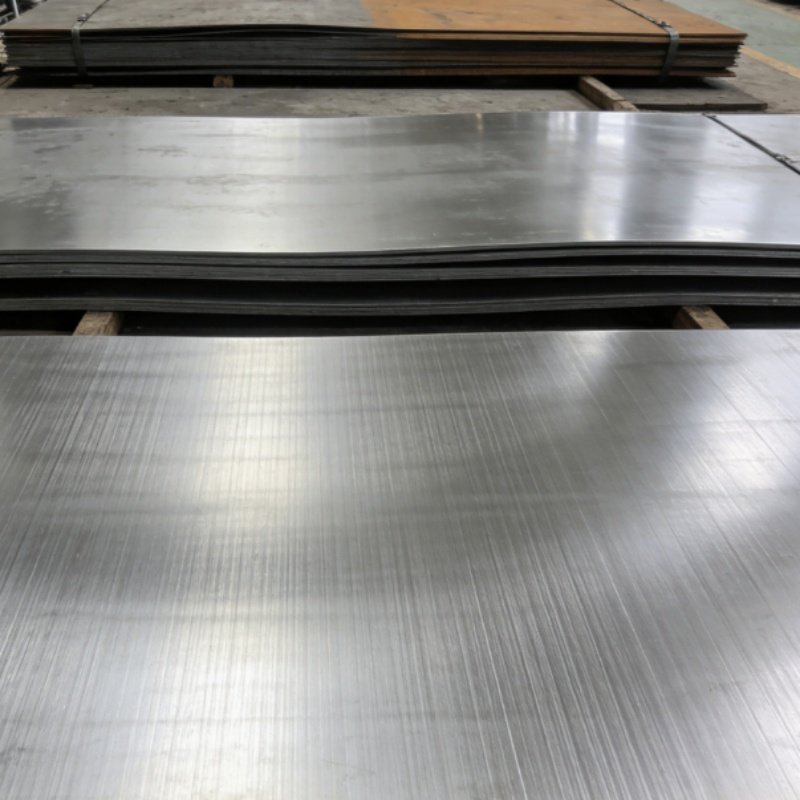
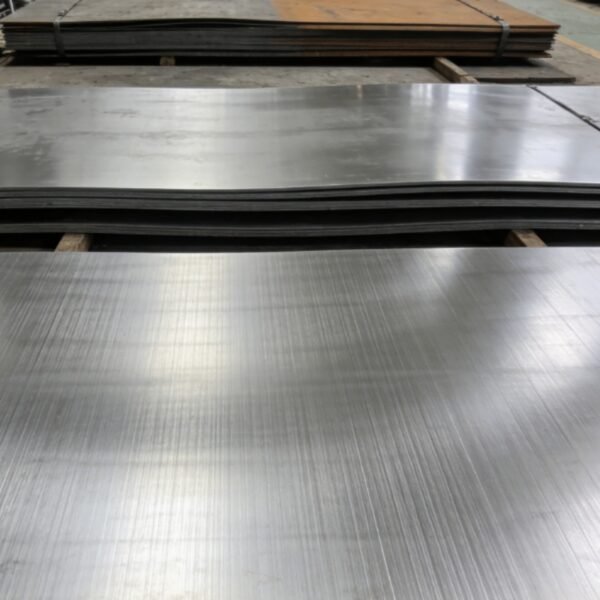
Alloy 59 UNS N06059 low-carbon Ni-Cr-Mo plate, sheet and strip to ASME SB-575 and SB-906, with 22-24% Cr, 15-16.5% Mo and a controlled nitrogen additi
Three elements decide whether a low-carbon nickel-chromium-molybdenum alloy can
carry a chlorinated process stream: the molybdenum level, the residual carbon, and
whether nitrogen is deliberately added. Alloy 59, UNS N06059, is the grade that answers
all three questions at once, and ASME gives it its own fitting designation, CR 5923 and
WP 5923, so that a buyer specifying it by UNS number and a buyer specifying it by
ASME designation are talking about the same material.
The material is covered by ASME SB-575 for plate, sheet and strip, which in turn
requires conformance to SB-906 for general delivery conditions. Because the carbon
limit is 0.010% maximum, this is a genuinely low-carbon grade, and that is what allows
the alloy to be welded and formed without the sensitisation risk that carbon brings into
a 20%-plus chromium austenitic.
These are the SB-575 Table 1 limits. They are the composition limits that appear on
the EN 10204 certificate, so the table can be read directly against incoming
inspection.
| Grade | UNS | Mo | Cr | Fe | W | Co | C max | N |
|---|---|---|---|---|---|---|---|---|
| Alloy 35 | N06035 | 7.60-9.00 | 32.25-34.25 | 2.00 max | 0.60 max | 1.00 max | 0.050 | – |
| Alloy MC | N06044 | 0.80-1.20 | 43.5-45.3 | 0.3 max | – | – | 0.02 | – |
| Hastelloy C-276 | N10276 | 15.0-17.0 | 14.5-16.5 | 4.0-7.0 | 3.0-4.5 | 2.5 max | 0.010 | – |
| Hastelloy C-22 | N06022 | 12.5-14.5 | 20.0-22.5 | 2.0-6.0 | 2.5-3.5 | 2.5 max | 0.015 | – |
| Alloy 59 | N06059 | 15.0-16.5 | 22.0-24.0 | 1.5 max | 2.5-3.5 | 0.3 max | 0.010 | 0.02-0.15 |
| Alloy 60 | N06058 | 18.5-21.0 | 20.0-23.0 | 1.5 max | 0.3 max | 0.3 max | 0.010 | 0.02-0.15 |
Read across the molybdenum column and the distinction becomes clear. C-22 and C-276
sit between 12.5% and 17.0% Mo; Alloy 59 reaches 15.0-16.5% while carrying a higher
chromium level of 22.0-24.0%, which is the combination that gives it its resistance to
oxidising acid and wet chlorine. The nitrogen addition of 0.02-0.15% is the detail that
most often gets left off a purchase order and then shows up as a question at the
inspection stage, so we state it explicitly on every certificate.
We supply Alloy 59 as hot-rolled plate from 3/16 inch (4.76 mm) and thicker, hot-rolled
sheet and cold-rolled sheet from 0.018 to 0.250 inch (0.46 to 6.4 mm), and cold-rolled
strip from 0.005 inch (0.13 mm). Material between 3/16 and 1/4 inch (4.8 to 6.4 mm) may
be furnished either as sheet or plate provided the condition ordered is met, and strip
under 48 inch (1219 mm) width may likewise be furnished as sheet. This is the
classification structure of SB-575 Table 1, and it is worth having the fabricator work
from it rather than from a habit of calling everything sheet.
Flat-rolled widths and general delivery conditions follow SB-906. Slit sheet, cut
lengths and customer-specific trimming can be supplied to the buyer’s instruction.
Alloy 59 appears in the fabrication of vessels and heat exchangers handling
chlorinated and hypochlorite-bearing streams, in flue gas desulphurisation scrubber
components, in pulp and paper bleaching plant, and in pharmaceutical reactors where
chlorine or hypochlorite is present. It is also used for the weld overlay and overlay
cladding of carbon steel pressure parts where full solid alloy construction would be
uneconomic, and for the linings of tanks and columns exposed to wet chlorine.
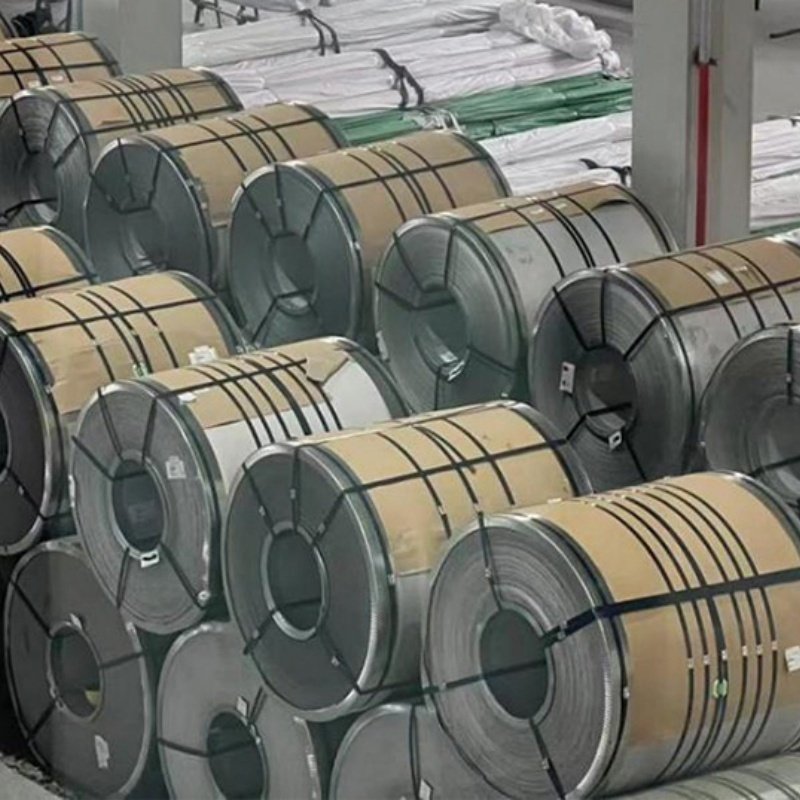
Because the grade is available as both plate and strip, the same alloy can be used
throughout a fabricated assembly: vessel shell plate, head plate, strip for
reinforcement, and formed fittings. If your project mixes plate with sheet or strip,
sending the full list in one enquiry keeps the material certificate package
consistent across the whole job.
Material is supplied with an EN 10204 3.1 certificate carrying the heat number and
full chemical analysis against SB-575 Table 1, together with tensile test results
taken from the plate or sheet as delivered. On request we add supplementary
examination: ultrasonic examination of plate, intergranular corrosion testing to
ASTM G28, ferrite content determination where relevant to the weld filler selection,
hardness testing, and heat treatment records. The inspection level can be witnessed by
your own inspector or by an independent third party, and we can supply the material
with our own identification marks or with your marking applied.
For a quotation, please state the grade and UNS number, the product form as
plate, sheet or strip, the thickness and width, the length or the required coil
weight, the edge condition, and the surface condition you need. For cold-rolled
material, tell us the temper and the finish, for example 2B, No.1 or No.4, because the
mechanical properties and the surface are both tied to that choice. If the material is
intended for a coded fabrication, quote the governing code and we will confirm the
supplementary requirements and the certificate wording. We can also supply slitting,
cut-to-length and edge preparation to the dimensions on your drawings.
Compare the supplier pages for this alloy family, each with dimensions, certification and RFQ information: