Address
304 North Cardinal St.
Dorchester Center, MA 02124
Work Hours
Monday to Friday: 7AM - 7PM
Weekend: 10AM - 5PM
Address
304 North Cardinal St.
Dorchester Center, MA 02124
Work Hours
Monday to Friday: 7AM - 7PM
Weekend: 10AM - 5PM

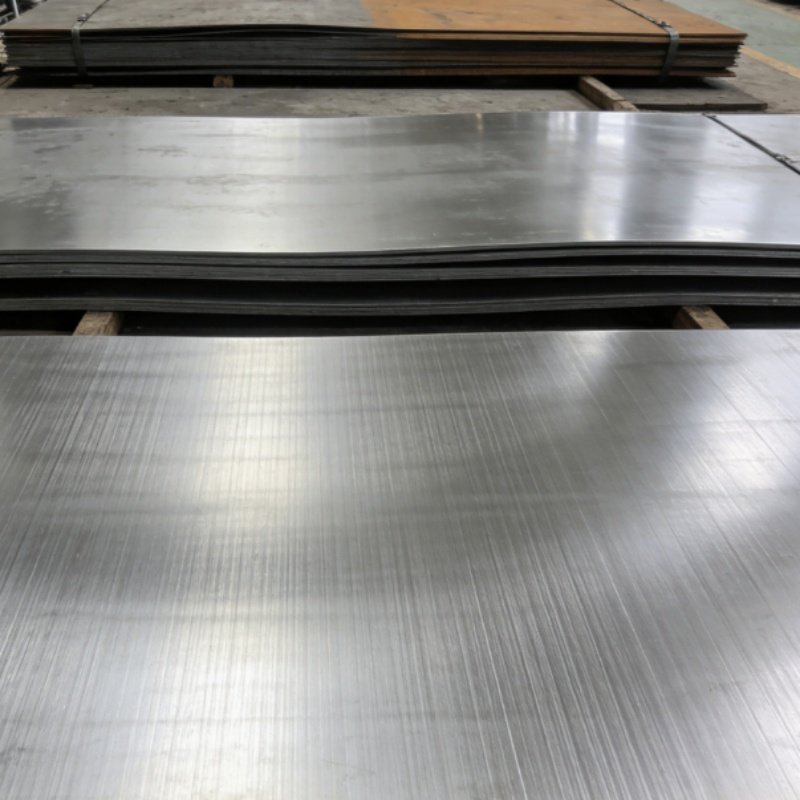
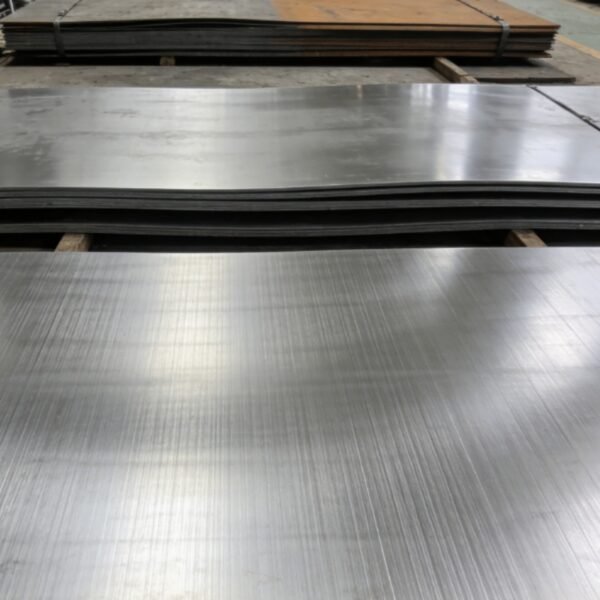
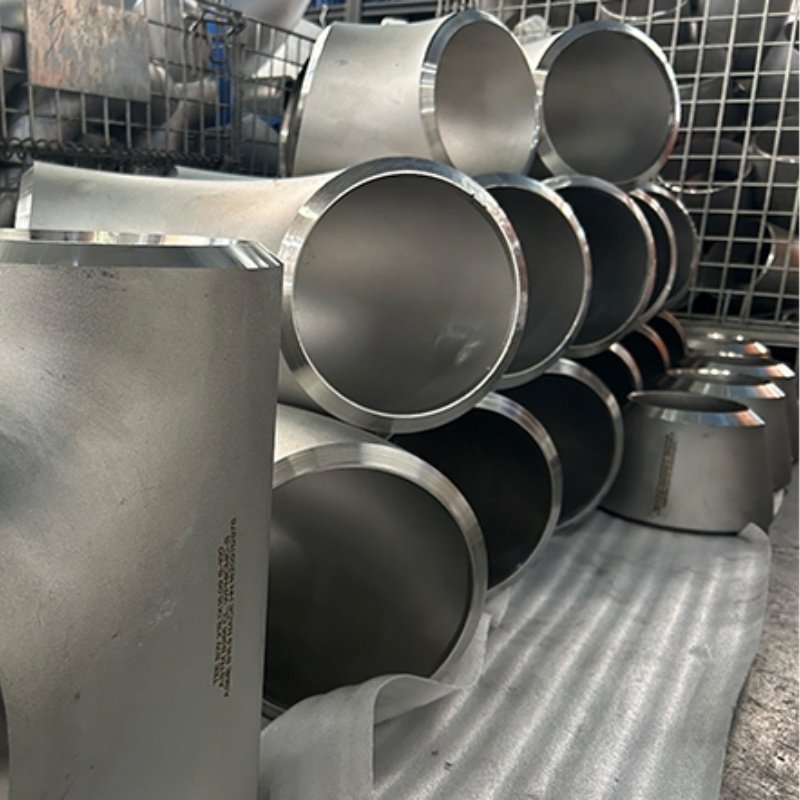
Alloy 603 UNS N06603 Ni-Cr-Fe-Al alloy to ASME SB-168 plate and sheet, SB-166 rod and bar, SB-366 CR603GT butt weld fittings. Stock sizes, EN 10204 3.1.
Three alloy designations in ASME Section II carry an aluminium addition to the nickel-chromium matrix, and only one of them, UNS N06603, has never appeared in our product catalogue. It is a Ni-Cr-Fe-Al alloy, and the aluminium content does two things at once: it deepens the protective oxide film that gives the alloy its resistance to oxidising service, and it raises the creep-rupture strength at the temperatures where 600-series material starts to lose margin. The grade is covered by ASME SB-168 for plate, sheet and strip, by ASME SB-166 for rod, bar and wire, and it appears in ASME SB-366 Table 2 as grade CR603GT / WP603GT for wrought fittings. That combination of coverage is what makes it a genuinely workable procurement rather than an exotic special order.
Alloy 603 sits between the 600 series and the alumina-forming 601 grade in terms of behaviour. Compared with UNS N06600, the aluminium addition lifts the chromium requirement and the nickel floor, which pushes the oxide behaviour towards the more protective end of the family. Compared with UNS N06601, which carries aluminium but also manganese and a different carbon profile, N06603 is specified where a buyer wants the oxidation resistance without the chemistry of 601.
The composition limits below are taken directly from the ASME SB-168 Table 2 chemical requirements and the matching SB-166 Table 1. For a full cross-reference of trade names and UNS numbers, our nickel alloy grade cross-reference guide page is the fastest way to confirm the designation your drawing or requisition actually calls for.
| Element | Alloy N06603 (SB-168 / SB-166) | Alloy N06600 (SB-168 / SB-166) | Alloy N06690 (SB-168 / SB-166) |
|---|---|---|---|
| Nickel, % | remainder (by difference) | 72.0 min | 58.0 min |
| Chromium, % | 24.0–26.0 | 14.0–17.0 | 27.0–31.0 |
| Aluminium, % | 2.4–3.0 | not required | not required |
| Iron, % | 8.0–11.0 | 6.0–10.0 | 7.0–11.0 |
| Manganese, max % | 0.15 | 1.0 | 0.5 |
| Carbon, max % | 0.05–0.12 | 0.15 | 0.05 |
| Copper, max % | 0.30 | 0.5 | 0.5 |
| Silicon, max % | 0.50 | 0.5 | 0.5 |
| Titanium, % | 0.01–0.25 | not required | not required |
| Zirconium, % | 0.01–0.10 | not required | not required |
One point worth flagging for procurement: the carbon limit in SB-168 for N06603 is stated as a range of 0.05 to 0.12 percent, not a simple maximum. That is a different specification logic from the plain 0.15 max used for N06600, and it is the kind of detail that gets missed when a purchasing department compares grades on a datasheet summary.
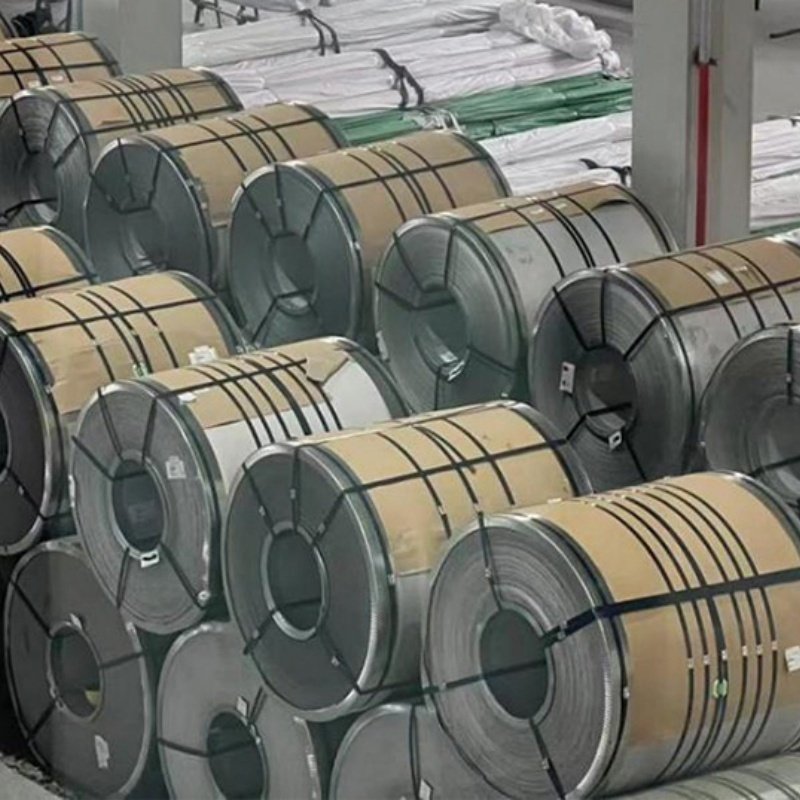
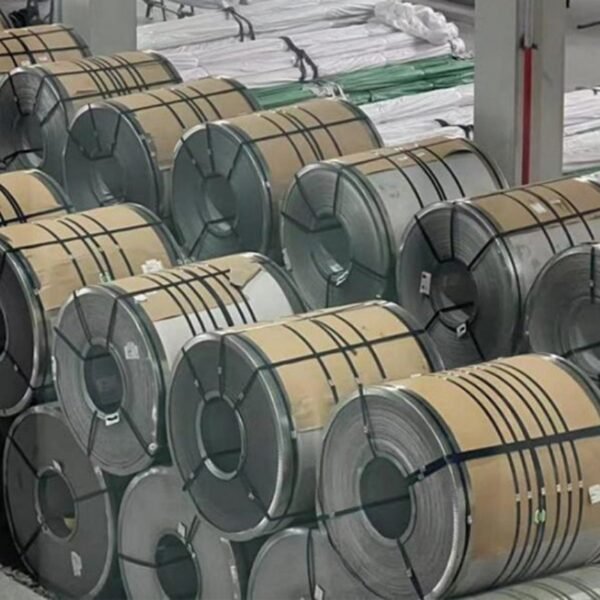
We supply N06603 in three product families, each backed by its own specification:
For the fittings family, dimensional details and the socket-weld/threaded variants are covered in our ASME B16.11 socket weld and threaded fitting dimensions guide. For flat product, our nickel alloy plate and sheet category lists the complete range we hold.
The ASME SB-168 Table 3 values for annealed N06603 are a tensile strength of 94 000 psi (650 MPa) minimum, a 0.2 percent offset yield strength of 43 000 psi (300 MPa) minimum, and 25 percent minimum elongation in 2 in. (50 mm). The same values apply to hot-rolled plate, hot-rolled sheet and cold-rolled plate in Table 3. For rod and bar, ASME SB-166 Table 2 gives the same 94 000 psi (650 MPa) tensile and 43 000 psi (300 MPa) yield minimums for annealed product of all sizes.
Set against the rest of the family, that is a meaningfully stronger alloy than 600 and a less ductile one — 25 percent elongation against 30 percent for N06600 and N06690 in the annealed condition. If your fabrication route involves heavy cold forming, tell us at enquiry stage rather than discovering it on the shop floor.
Alumina-forming nickel-chromium alloys earn their place where a process gas carries moisture and oxygen at temperature. Applications that regularly specify N06603 include heat-treatment furnace fixtures and baskets, radiant-tube supports, heat-exchanger components in high-temperature steam or flue gas, and oxidation-resistant parts of chemical processing equipment handling dry oxidising media.
Our guide to heat treatment in round bars explains why the annealing condition changes the numbers on the certificate and why the same grade can show different tensile values depending on the delivery form.
Send us the specification and grade, the form and the dimensions, the quantity, and the standard of the receiving country, and we will come back with availability, mill lead time and the inspection document package. Useful details to include: whether you need plate, sheet, strip, rod, bar or fittings; the thickness or nominal size range; the delivery condition (annealed, hot-rolled or cold-worked); and whether third-party certification or a specific inspection level is required. If your enquiry is for fittings rather than flat product, quote the ASME B16.9 schedule and the pressure class, and we will confirm the matching dimensional standard.
For anything outside this list — different delivery conditions, non-standard sizes, or a grade we have not listed — contact us directly and we will check it against the specification text with our technical department before quoting.