Address
304 North Cardinal St.
Dorchester Center, MA 02124
Work Hours
Monday to Friday: 7AM - 7PM
Weekend: 10AM - 5PM
Address
304 North Cardinal St.
Dorchester Center, MA 02124
Work Hours
Monday to Friday: 7AM - 7PM
Weekend: 10AM - 5PM

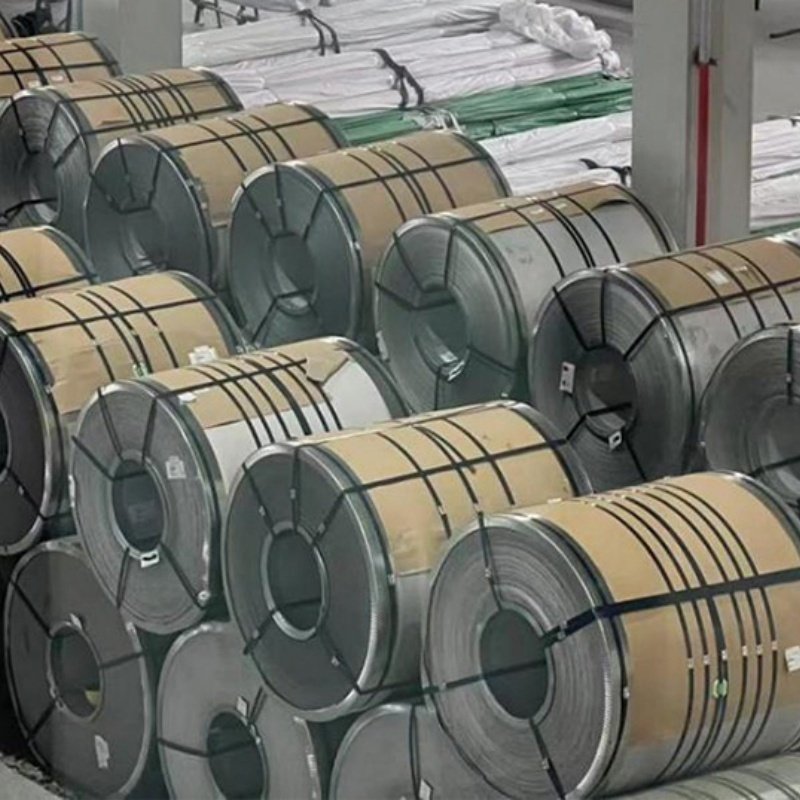
The nickel-molybdenum alloys are the simplest family in the nickel alloy system to specify and the easiest to get wrong on paper. Their composition is almost entirely nickel and molybdenum, with little or no chromium, and that is the point: without chromium there is no passive oxide film, so these alloys work by bulk molybdenum content alone in reducing media where chromium-bearing nickel alloys would be attacked. Hastelloy B, B-2 and B-3, Alloy 29 and N10624 all sit inside ASME SB-333, carrying between 21 and 32 % molybdenum.
| ASME specification | Grade | UNS | Product form | Delivery condition |
|---|---|---|---|---|
| SB-333 | Hastelloy B | N10001 | Plate, sheet, strip | Rolled, annealed |
| SB-333 | Hastelloy B-2 | N10665 | Plate, sheet, strip | Rolled, annealed |
| SB-333 | Hastelloy B-3 | N10675 | Plate, sheet, strip | Rolled, annealed |
| SB-333 | Alloy 29 | N10629 | Plate, sheet, strip | Rolled, annealed |
| SB-333 | Alloy B-10 | N10624 | Plate, sheet, strip | Rolled, annealed |
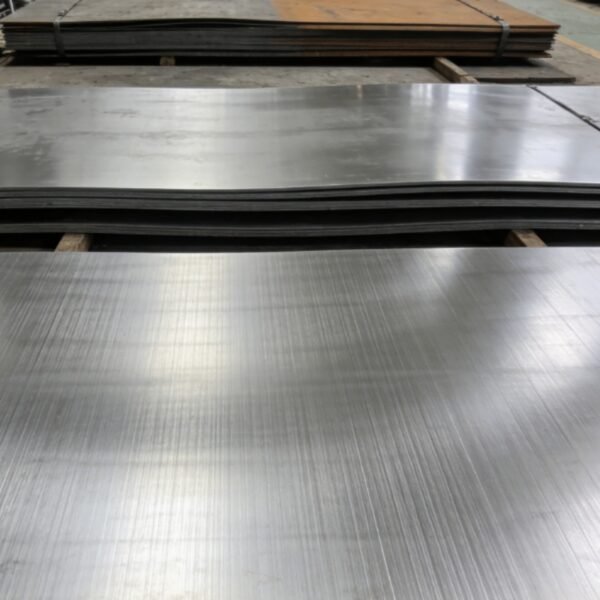
SB-333 covers plate, sheet and strip of nickel-molybdenum alloys for general corrosive service. The material is supplied annealed, with the grain size controlled for annealed sheet.
Composition is from SB-333 Table 1. The controlling column is molybdenum: the higher it goes, the deeper the reduction in non-oxidising acids the alloy tolerates.
| Element | Alloy B N10001 | Alloy B-2 N10665 | Alloy B-3 N10675 | Alloy 29 N10629 |
|---|---|---|---|---|
| Nickel | remainder | remainder | 65.0 % min | remainder |
| Molybdenum | 26.0–30.0 % | 26.0–30.0 % | 27.0–32.0 % | 26.0–30.0 % |
| Iron | 4.0–6.0 % | 2.0 % max | 1.0–3.0 % | 1.0–6.0 % |
| Chromium | 1.0 % max | 1.0 % max | 1.0–3.0 % | 0.5–1.5 % |
| Carbon, max | 0.05 % | 0.02 % | 0.01 % | 0.01 % |
| Ni + Mo | — | — | 94.0–98.0 % | — |
Alloy B-3 is the only grade with a combined nickel-plus-molybdenum floor of 94.0 to 98.0 %, which is how it keeps ductility while raising molybdenum to 32 %. N10624 is the odd one out: at 21 to 25 % molybdenum and 6 to 10 % chromium it reintroduces some chromium oxide passivation and carries a balanced 5 to 8 % iron.
SB-333 Table 2 sets the tensile, yield and elongation minimums, which differ for material under 3/16 in. (4.76 mm) and for plate from 3/16 in. to 2 1/2 in. (63.5 mm).
| Alloy | Thickness | Tensile min | Yield min | Elongation min |
|---|---|---|---|---|
| Alloy B N10001 | Under 3/16 in. | 115 000 psi (795 MPa) | 50 000 psi (345 MPa) | 35 % |
| Alloy B N10001 | Plate 3/16 to 2 1/2 in. | 100 000 psi (690 MPa) | 45 000 psi (310 MPa) | 30 % |
| Alloy B-2 N10665 | Under 3/16 in. | 110 000 psi (760 MPa) | 51 000 psi (350 MPa) | 40 % |
| Alloy B-3 N10675 | Under 3/16 in. | 110 000 psi (760 MPa) | 51 000 psi (350 MPa) | 40 % |
| Alloy 29 N10629 | Under 3/16 in. | 110 000 psi (760 MPa) | 51 000 psi (350 MPa) | 40 % |
For plate from 3/16 in. to 2 1/2 in., N10665, N10675 and N10629 all hold the same 110 000 psi (760 MPa) tensile with a 51 000 psi (350 MPa) yield and 40 % elongation. Annealed sheet is further controlled by SB-333 Table 3: ASTM micrograin size number 3.0 maximum and average grain diameter 0.127 mm (0.0050 in.) maximum for thickness 0.125 in. (3.175 mm) and under, and micrograin size number 1.5 maximum with a 0.214 mm (0.0084 in.) average grain diameter maximum above.
Hydrogen chloride and hydrochloric acid service, sulphuric and phosphoric acid, hydrofluoric acid handling, pulp and paper bleaching, formaldehyde and acetic acid plant, brine evaporation, and any process where a chromium-bearing alloy would be attacked and the media are reducing. The Hastelloy Alloy B butt weld fittings page covers the matching fitting grade, and B-2 and B-3 butt weld fittings covers the wrought form.
Material is supplied with certification and a report of test results under SB-333, with chemical analysis and tension testing performed per lot. Product analysis is the purchaser’s responsibility, so state the supplementary requirements if a check analysis is needed. Third-party inspection and full heat traceability can be arranged. The impact testing and certification guide sets out what a complete document package should contain.
Send the UNS number, the product form — plate, sheet or strip — the thickness and width, the length, and the delivery condition. For plate that will be cut and formed, tell us the final part dimensions so we can supply with the grain orientation and annealed condition suited to the operation. Our Alloy 59 plate and strip page covers the chromium-bearing alternative, and C-276, Alloy 22 and Alloy 2000 plate and strip covers the low-carbon chromium-bearing grades. Our acid service alloy selection guide explains the chemistry-versus-medium reasoning.
Compare the current supplier pages for this alloy, each with dimensions, certification and RFQ information: