Address
304 North Cardinal St.
Dorchester Center, MA 02124
Work Hours
Monday to Friday: 7AM - 7PM
Weekend: 10AM - 5PM
Address
304 North Cardinal St.
Dorchester Center, MA 02124
Work Hours
Monday to Friday: 7AM - 7PM
Weekend: 10AM - 5PM

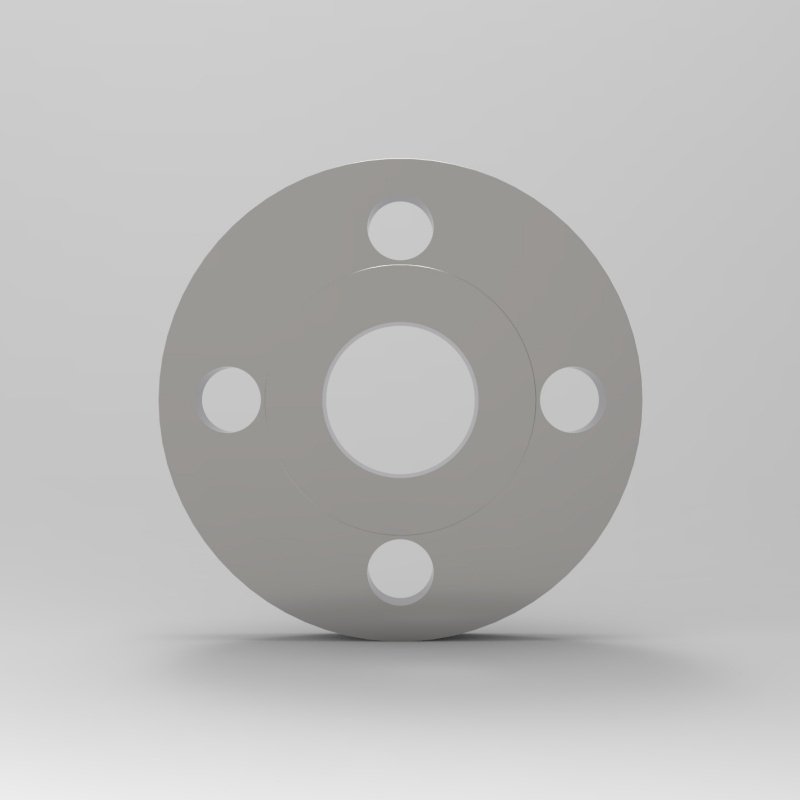
SA-182 F1925 and F1925N forged pipe flanges in super austenitic 6 percent molybdenum grades N08925 and N08926. B16.5 and B16.47 dimensions, EN 10204 3.1.
Two grade markings in ASME SA-182 carry the 6 percent molybdenum super austenitic chemistry that most people mean when they say “super austenitic flange”. F1925 is UNS N08925 and F1925N is N08926. The difference between them is small and consequential: F1925N carries a higher nitrogen window, and that nitrogen is what produces the higher strength in the N grade and the better resistance to pitting in chloride-bearing acid. If a drawing calls for one and the mill certificate for the other arrives, the mismatch is real even though both are nominally “6 Mo”.
The chemical requirements below are taken directly from ASME SA-182 Table 2. Both grades sit in the low-carbon Ni-Fe-Cr-Mo-Cu family with nitrogen deliberately controlled.
| Element | F1925 (UNS N08925) | F1925N (UNS N08926) |
|---|---|---|
| Carbon, max % | 0.020 | 0.020 |
| Manganese, max % | 1.00 | 2.00 |
| Phosphorus, max % | 0.045 | 0.030 |
| Sulfur, max % | 0.030 | 0.010 |
| Silicon, max % | 0.50 | 0.50 |
| Nickel, % | 24.0–26.0 | 24.0–26.0 |
| Chromium, % | 19.0–21.0 | 19.0–21.0 |
| Molybdenum, % | 6.0–7.0 | 6.0–7.0 |
| Copper, % | 0.80–1.50 | 0.50–1.50 |
| Nitrogen, % | 0.10–0.20 | 0.15–0.25 |
| Iron | balance | balance |
SA-182 Table 1 assigns different solution treatments to the two grades, and this is the practical reason a foundry separates them. F1925 is solution treated and quenched at 1800 to 1900 °F, or 983 to 1038 °C. F1925N is solution treated and quenched at 2150 °F, or 1177 °C. Both are liquid quenched or rapidly cooled.
From SA-182 Table 3, the forging minimums are as follows. The N grade is the stronger of the two and carries the higher elongation floor, which reflects the nitrogen addition rather than any difference in base composition.
| Grade | Tensile strength, min ksi [MPa] | Yield strength, min ksi [MPa] | Elongation, min % |
|---|---|---|---|
| F1925 (N08925) | 87 [600] | 43 [295] | 30 |
| F1925N (N08926) | 94 [650] | 43 [295] | 35 |
For comparison, the same two grades in plate form carry the yield strengths and elongations given in ASME SB-625 Table 2. When a line combines forgings with plate, the differing strength requirements between the two product forms are worth flagging to the design authority early. Our nickel alloy material selection and properties guide explains how the same grade behaves differently across product forms, and the super austenitic plate, sheet and strip page carries the SB-625 data in full.
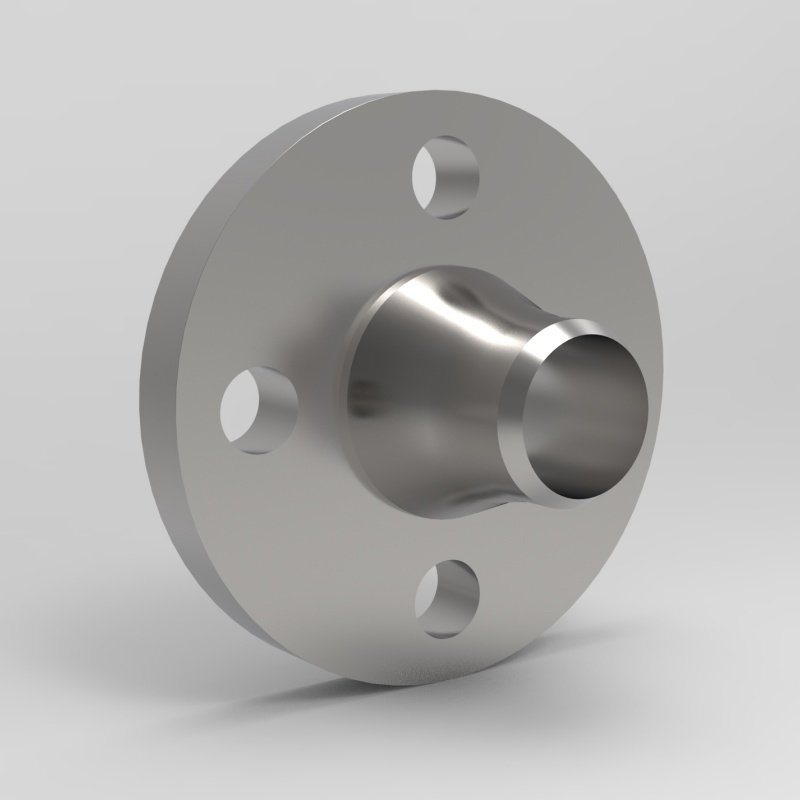
F1925 and F1925N forged flanges are produced to ASME B16.5 for sizes up to NPS 24 and to ASME B16.47 for the larger series. Raised face is the default, with flat face and ring type joint available. Forged fittings in the same grades are supplied to ASME B16.11 for socket weld and threaded forms. Typical forged items include weld neck and slip-on flanges, blind flanges, forged elbows, reducers, tees, crosses and caps.
The same grades also carry the CR1925 and CR1925N wrought fitting designations in ASME SB-366, which is the specification covering wrought nickel and nickel alloy fittings to ASME B16.9 and B16.11. Our super austenitic butt weld fittings page covers that product form.
The 6 percent molybdenum super austenitic grades exist because standard 316 type stainless fails where molybdenum cannot be increased further. Typical service is pulp and paper bleaching, seawater systems, hydrochloric and sulphuric acid handling, pharmaceutical processing equipment, and flue gas cleaning. In seawater and in wet chlorine, the nitrogen addition in F1925N is what widens the pitting resistance margin. Our acid service fittings and flanges alloy selection article walks through how this grade compares against nickel alloys for the same duty.
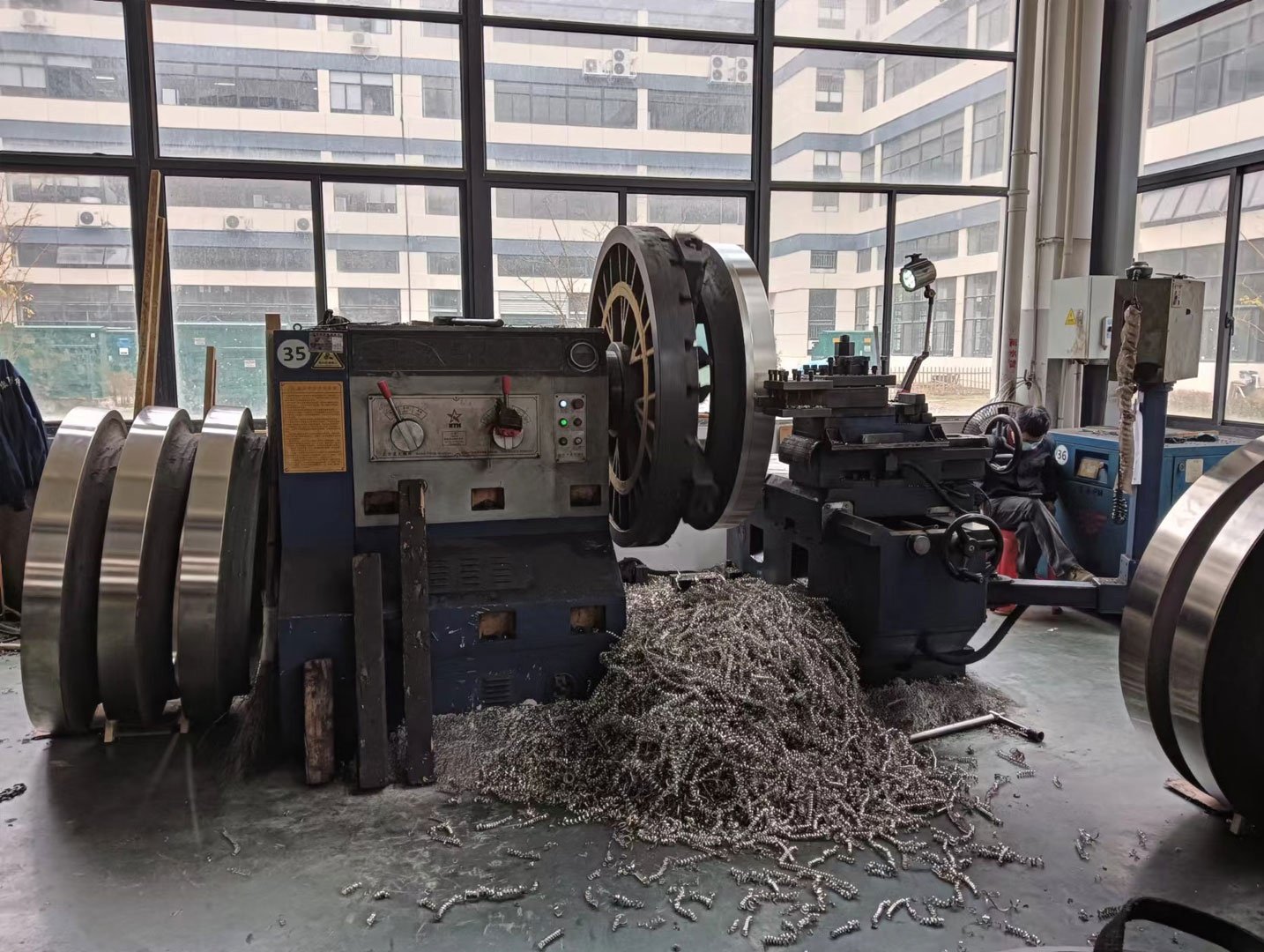
Standard inspection on our SA-182 F1925 and F1925N forgings includes heat treatment recording with actual solution temperature and quench medium, mechanical testing to the SA-182 Table 3 minimums, dimensional inspection to B16.5 or B16.47, and positive material identification on each item. Material test reports are issued to EN 10204 3.1. Supplementary requirements such as impact testing at a specified temperature, intergranular corrosion testing or additional NDE can be added on the purchase order and are performed on the same lot definition used for mechanical testing.
For a quotation, please tell us the grade (F1925 or F1925N), nominal size, pressure class, face type, quantity, and any supplementary testing or certification requirement. If the specification you hold does not distinguish between the two grades, give us the service environment and design temperature and we will advise which one is technically correct rather than simply supplying the one that is easier to source.
For related products, see the nickel alloy forged flanges and fittings category and our Hastelloy C-276 butt weld fittings range for comparison against a higher nickel-chromium-molybdenum grade.
Compare the supplier pages for this alloy family, each with dimensions, certification and RFQ information: