Address
304 North Cardinal St.
Dorchester Center, MA 02124
Work Hours
Monday to Friday: 7AM - 7PM
Weekend: 10AM - 5PM
Address
304 North Cardinal St.
Dorchester Center, MA 02124
Work Hours
Monday to Friday: 7AM - 7PM
Weekend: 10AM - 5PM

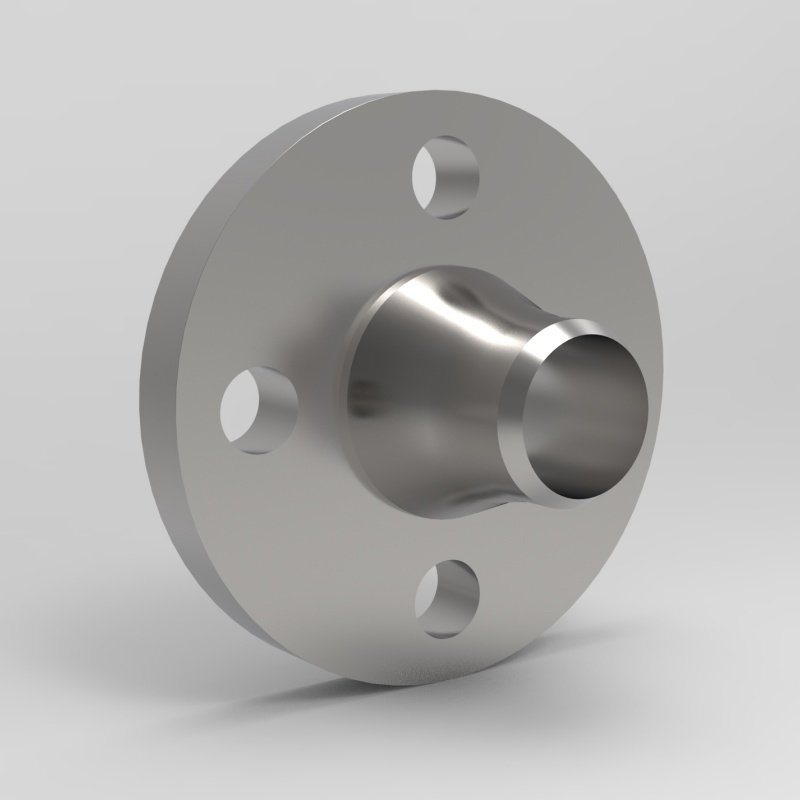
Hastelloy C-276 forged pipe flanges to ASME SB-462 and B16.5, UNS N10276. Weld neck, slip-on, socket weld, threaded and blind. EN 10204 3.1 MTC.
Hastelloy C-276 forged pipe flanges are the most widely used corrosion-resistant flange in sour and acid service, and the one most often specified without enough thought. UNS N10276 is a nickel-chromium-molybdenum-tungsten alloy whose 15 % to 17 % molybdenum and 3.0 % to 4.5 % tungsten give it a corrosion resistance that no stainless or duplex flange approaches in reducing acids, while its very low carbon and silicon keep the corrosion resistance in the heat-affected zone after welding. ASME SB-462 is the specification written for exactly this purpose: forged or rolled nickel alloy pipe flanges, forged fittings and valves for corrosive high-temperature service.
There is a related page on this site for the multi-grade view, Hastelloy C-276 / C-22 / Alloy 2000 forged flanges and fittings, which compares the three grades that ASME SB-462 covers together. This page is the single-grade C-276 flange page and concentrates on the flange itself: the types, the dimensional standard, the pressure class and the rating.
| Designation | Value |
|---|---|
| UNS number | N10276 |
| Material specification | ASME SB-462 (forged or rolled nickel alloy pipe flanges, forged fittings and valves for corrosive high-temperature service). ASME SB-564 covers nickel alloy forgings and also lists UNS N10276 |
| Dimensional standard | ASME B16.5 (NPS 1/2 to NPS 24); ASME B16.47 (NPS 26 to NPS 60) |
| Rating table | ASME B16.5 Table 2-3.8, material group 3.8 |
| Material group | 3.8, nominal designation 54Ni–16Mo–15Cr |
| Pressure class | Class 150, 300, 600, 900, 1500 and 2500 (Class 2500 to NPS 12 only) |
| Delivery condition | Solution annealed, per ASME SB-462 paragraph 5.3.1 |
| Marking | Per ASME B16.5 paragraph 4.2.3 and 4.2.8; nickel alloy forgings stamped in accordance with MSS SP-25 |
ASME B16.5 covers pressure-temperature ratings, materials, dimensions, tolerances, marking, testing and the method of designating openings for pipe flanges and flanged fittings in sizes NPS 1/2 through NPS 24, with rating class designations 150, 300, 400, 600, 900, 1500 and 2500, and Class 2500 applying to NPS 1/2 through NPS 12. For NPS 26 and larger ASME B16.47 takes over, covering welding neck and blind flanges in classes 75, 150, 300, 400, 600 and 900, in two dimensional series that are not interchangeable: Series A follows the former MSS SP-44 practice and Series B follows the former API 605 practice.
Two dimensional points decide whether a flange will actually mate. The first is the raised face height: ASME B16.5 paragraph 6.4.1 specifies that Classes 150 and 300 pipe flanges are regularly furnished with a 2 mm (0.06 in.) raised face and that Classes 400, 600, 900, 1500 and 2500 are regularly furnished with a 7 mm (0.25 in.) raised face, in each case in addition to the minimum flange thickness tf. A Class 150 flange therefore does not seat against a Class 600 flange without a gasket that tolerates the height difference. The second is the bore: ASME B16.5 note (7) to the dimension tables ties the bore to the inside diameter of B36.10M standard wall pipe, with Schedule 40 wall in NPS 10 and smaller, and paragraph 6.3.2 allows a raised face to be removed to convert a raised face flange to a flat face flange provided the required tf dimension is maintained.
Full dimension tables for Class 150 (Table F8), Class 300 (Table F11), Class 600 (Table F16) and Class 900 (Table F18) are published separately on this site in ASME B16.5 flange dimensions: Class 150, 300, 600 and 900, and the boundary between the two flange standards is covered in ASME B16.5 or B16.47: which flange standard applies at what size.
The flange types supplied for this grade are welding neck, slip-on, socket weld, threaded, lap joint and blind, with socket welding flanges produced to NPS 3 and smaller only. Welding neck is the default in corrosive service because the hub lets the bolt load reach the pipe wall gradually and keeps the joint aligned when the line is hot, which matters in a section that cycles between ambient and process temperature. Where the joint has to be broken for inspection, a slip-on or threaded flange is used instead, and in that case the flange face is the single most exposed corrosion surface in the connection, which is a further argument for specifying the grade on the flange rather than only on the pipe.
| Element | Composition, % (max unless stated) |
|---|---|
| Nickel | balance |
| Chromium | 14.5 – 16.5 |
| Molybdenum | 15.0 – 17.0 |
| Tungsten | 3.0 – 4.5 |
| Iron | 4.0 – 7.0 |
| Cobalt | 2.5 |
| Vanadium | 0.35 |
| Carbon | 0.010 |
| Silicon | 0.08 |
| Manganese | 1.0 |
| Phosphorus | 0.04 |
| Sulfur | 0.03 |
| Copper | not required by ASME SB-462 Table 1 |
| Nitrogen | not required by ASME SB-462 Table 1 |
Source: ASME SB-462 Table 1, chemical requirements, cross-checked against ASME SB-564 Table 1 for the same grade; the two documents agree on every element for UNS N10276. The 0.010 % carbon and 0.08 % silicon maxima are the two figures that matter most for fabrication. At these levels the alloy is effectively immune to sensitisation, so a welded C-276 joint keeps its corrosion resistance in the heat-affected zone without any post-weld heat treatment. Copper is not required, which is what separates C-276 from C-22 and from Alloy 2000 in reducing acid service.
| Property | Requirement |
|---|---|
| Tensile strength, min | 100 ksi (690 MPa) |
| Yield strength, 0.2 % offset, min | 41 ksi (283 MPa) |
| Elongation in 2 in. or 50 mm, min | 40 % |
| Condition | Solution annealed |
Source: ASME SB-462 Table 2, mechanical property requirements for UNS N10276. The same figures appear in ASME SB-564 Table 2 for the same grade in the solution annealed condition. ASME B16.5 note (1) to Table 2-3.8 requires solution annealed material only, and note (2) limits the use of this grade to 675 °C and below.
| Temperature, °C | Class 150 | Class 300 | Class 400 | Class 600 | Class 900 | Class 1500 | Class 2500 |
|---|---|---|---|---|---|---|---|
| −29 to 38 | 20.0 | 51.7 | 68.9 | 103.4 | 155.1 | 258.6 | 430.9 |
| 50 | 19.5 | 51.7 | 68.9 | 103.4 | 155.1 | 258.6 | 430.9 |
| 100 | 17.7 | 51.5 | 68.7 | 103.0 | 154.6 | 257.6 | 429.4 |
| 150 | 15.8 | 50.3 | 66.8 | 100.3 | 150.6 | 250.8 | 418.2 |
| 200 | 13.8 | 48.3 | 64.5 | 96.7 | 145.0 | 241.7 | 402.8 |
| 250 | 12.1 | 46.3 | 61.7 | 92.7 | 139.0 | 231.8 | 386.2 |
| 300 | 10.2 | 42.9 | 57.0 | 85.7 | 128.6 | 214.4 | 357.1 |
Source: ASME B16.5 Table 2-3.8, pressure-temperature ratings for group 3.8 materials, expressed in bar. UNS N10276 shares this table with UNS N06625 and several other nickel-chromium-molybdenum grades because the grouping is by behaviour rather than by alloy family. Intermediate temperatures may be interpolated linearly between tabulated values. Only solution annealed material may be used for these ratings.
C-276 flanges are forged from billet, solution annealed and rapidly cooled, then machined and drilled. ASME SB-462 paragraph 5.3.1 requires the product of UNS N10276 to be furnished in the solution annealed condition, and NOTE 2 to that clause gives the recommended annealing temperature as 2025 to 2075 °F (1107 to 1135 °C) followed by water quenching or rapid cooling by other means. Heat treatment may be performed before machining.
ASME SB-462 paragraph 7.2 requires hydrostatic shell tests to the pressures prescribed in ANSI B16.5 for the applicable alloy steel rating after machining, and paragraph 7.2.1 states that no hydrostatic test is required for welding neck or other flanges, since the flange is not a pressure-containing shell in its own right. Paragraph 7.3 requires a macroetch test that shows sound and reasonably uniform material free of injurious laminations, cracks, segregations and similar objectionable defects, and where successive tests show 10 % of a heat failing, all forgings from that heat shall be rejected. Weld repairs are permitted under ASME SB-462 clause 17 and the procedure and welders are qualified to Section IX of the ASME Boiler and Pressure Vessel Code.
Because the carbon and silicon maxima are so low, C-276 does not require post-weld heat treatment and the corrosion resistance of the joint does not depend on it. The welding discipline for this alloy is about heat input and interpass temperature rather than about PWHT, and the filler metal has to be qualified for the same grade so that the deposited weld metal is not the weak link in a corrosion-resistant joint.
Supplementary testing on this grade is supplied when it is named on the order rather than assumed: hardness testing, charpy impact testing, intergranular corrosion testing to ASTM G28, ultrasonic or eddy current examination, positive material identification and liquid penetrant examination. ASME SB-462 Supplementary Requirement S2 calls for positive material identification of 100 % of the product by Guide E1916 and requires that any product found not to be of the correct grade be rejected, which is the natural supplementary requirement for a multi-grade nickel alloy shop. Supplementary Requirement S1 covers the intergranular corrosion test for UNS N08020 rather than for this grade, so an A262 test on C-276 is a purchaser requirement rather than a specification requirement. NACE MR0175 / ISO 15156 documentation is added where the flange is destined for sour service.
Each flange is marked with the material grade and specification, the nominal
size, the pressure class and the heat number. The rating designation number
corresponding to the pressure rating class is applied to the flange in accordance
with ASME B16.5. Where the flange is made from a material that meets more than one
specification or grade, the marking procedure of ASME B16.5 for multiple material
marking is followed. Nickel alloy forgings are stamped in accordance with MSS SP-25
in a position that does not impair the usefulness of the forging. B16.5 also
permits the manufacturer to supplement the mandatory material indications with a
trade designation, provided confusion of symbols is avoided.
Flanges are supplied in the annealed condition, pickled, with a machined sealing
face. Each flange carries the grade, the governing material specification, the
dimensional standard, the nominal size, the pressure class and the heat number,
linked to the EN 10204 certificate issued with the shipment. Export packing is by
wooden crate, steel pallet or case, with plastic end caps and, where required, VCI
protection inside the case. Flange facings are protected individually so that the
sealing surface is not marked in transit. Delivery schedule, quantity, minimum
order quantity and price are confirmed only against a specific enquiry.
Hastelloy C-276 flanges are specified in offshore and onshore sour gas gathering and processing piping, in the amine and acid gas handling sections of gas plants, in hydrofluoric and sulphuric acid alkylation units, in hydrochloric acid service, in pulp and paper bleaching equipment, in pharmaceutical and fine chemical processing, and in sewage and brine treatment plant. The flange is frequently the governing item in the joint because it is the component with the most exposed surface in a corrosive environment, and in sour service it is the component that has to satisfy NACE MR0175 / ISO 15156 alongside the pipe.
SB-462 and SB-564 are both correct, and they are not interchangeable. ASME SB-462 is titled for forged or rolled nickel alloy pipe flanges, forged fittings and valves for corrosive high-temperature service, and its scope lists UNS N10276 among others. ASME SB-564 is the general nickel alloy forging specification and also lists UNS N10276. For a flange, SB-462 is the document that addresses the product directly, and it carries requirements the general forging specification does not, notably the macroetch test of paragraph 7.3, the hydrostatic provision of paragraph 7.2 with its exemption for flanges, the heat-treatment clause with its recommended annealing temperatures, and the Supplementary Requirement S2 that calls for positive material identification of 100 % of the product by Guide E1916. Which specification to call depends on what the purchaser wants verified, and it should be stated rather than left to the supplier.
Why the low carbon and silicon values are the point. ASME SB-462 Table 1 gives 0.010 % carbon maximum and 0.08 % silicon maximum for UNS N10276. Those are the lowest values in the nickel alloy family and they are deliberate. A conventional austenitic stainless steel with normal carbon content loses chromium carbide from the grain boundaries in the heat-affected zone, and the resulting chromium-depleted zone corrodes intergranularly, which is why 316L in a welded sour line is qualified by an intergranular corrosion test and often by additional silicon control. At 0.010 % carbon the C-276 heat-affected zone cannot form that carbide, so the welded joint has the same corrosion behaviour as the parent metal and no post-weld heat treatment is required. The practical consequence is that C-276 flanges can be welded into a line without any PWHT operation, and the joint is not the weak point in the corrosion allowance.
Choosing between C-276, C-22 and Alloy 2000 for a flange. All three appear in ASME SB-462 and all three sit in the same material group 3.8 rating table, so the pressure rating does not discriminate between them. The chemistry does. C-276 and C-22 are copper-free and hold their performance in strongly reducing acids; C-22 has the higher chromium at 20.0 % to 22.5 % and is the better performer in mixed oxidising acid; Alloy 2000 carries up to 0.3 % copper with a nitrogen addition of 0.15 % to 0.25 %, and it is the grade of choice in copper-bearing sulphuric acid. Where the medium is reducing hydrochloric acid, C-276 is the safe default. The flange and the pipe should be on the same grade, because the corrosion mechanism is compositional.
Both specifications cover UNS N10276. ASME SB-462 is written specifically for forged or rolled nickel alloy pipe flanges, forged fittings and valves for corrosive high-temperature service and carries the macroetch test, the heat-treatment clause and the positive material identification supplementary requirement. ASME SB-564 is the general nickel alloy forging specification. State which one the order is calling for.
Solution annealed, as required by ASME SB-462 paragraph 5.3.1, with the recommended annealing temperature of 2025 to 2075 °F (1107 to 1135 °C) followed by water quenching or rapid cooling, per NOTE 2 to that clause.
No. With carbon at 0.010 % maximum and silicon at 0.08 % maximum the alloy does not sensitise, so the corrosion resistance of the weld heat-affected zone matches the parent metal. Heat input and interpass temperature control, not PWHT, are what protect the joint.
ASME SB-462 paragraph 7.2 requires hydrostatic shell tests after machining, and paragraph 7.2.1 states that no hydrostatic test is required for welding neck or other flanges. A macroetch test is required under paragraph 7.3.
ASME B16.5 Table 2-3.8 for material group 3.8 gives 20.0 bar at Class 150 ambient, 51.7 bar at Class 300, 103.4 bar at Class 600 and 155.1 bar at Class 900, falling with temperature. Only solution annealed material may be used for these ratings.
All three sit in material group 3.8 and share the same rating table, so the selection is chemical rather than pressure-related. C-276 and C-22 are copper-free and suit reducing acids, C-22 has the higher chromium for mixed oxidising service, and Alloy 2000 carries copper and nitrogen for copper-bearing sulphuric acid.