Address
304 North Cardinal St.
Dorchester Center, MA 02124
Work Hours
Monday to Friday: 7AM - 7PM
Weekend: 10AM - 5PM
Address
304 North Cardinal St.
Dorchester Center, MA 02124
Work Hours
Monday to Friday: 7AM - 7PM
Weekend: 10AM - 5PM

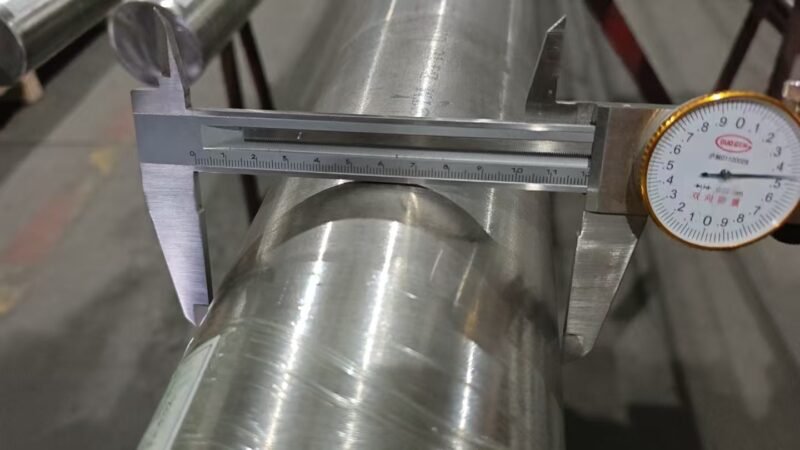
Alloy 62 UNS N10362 low-carbon Ni-Mo-Cr round bar and rod to ASME SB-574, with 21.5-23% Mo, 13.8-15.6% Cr and a tantalum addition, EN 10204 3.1 certif
Specify a bar with 21.5% to 23.0% molybdenum and there is very little room for
ambiguity about what you have bought, but there is a great deal of room for confusion
about the carbon level and the tantalum addition that come with it. Alloy 62, UNS
N10362, is the low-carbon nickel-molybdenum-chromium grade that ASME lists as CR HBC1
and WP HBC1 in the fittings table, and SB-574 and SB-575 both carry it with an
explicit tantalum column. The tantalum is what separates this grade from the
straight nickel-molybdenum alloys, and it is the detail that most often gets dropped
between the enquiry and the purchase order.
The values below are taken from the SB-574 and SB-575 composition tables, which
agree with each other for this grade, so the same limits apply whether you order bar
or flat product.
| Element | Alloy 62 (N10362) | Alloy 59 (N06059) | Alloy 35 (N06035) |
|---|---|---|---|
| Nickel | remainder | remainder | remainder |
| Molybdenum | 21.5-23.0 | 15.0-16.5 | 7.60-9.00 |
| Chromium | 13.8-15.6 | 22.0-24.0 | 32.25-34.25 |
| Tantalum | 1.5-2.2 | – | – |
| Iron | 1.25 max | 1.5 max | 2.00 max |
| Carbon, max | 0.010 | 0.010 | 0.050 |
| Cobalt, max | 1.0 | 0.3 | 1.00 |
| Titanium | 0.02-0.25 | 0.7 max | – |
| Copper | 1.3-1.9 | 0.50 max | 0.30 max |
Those three columns are the decision a buyer is actually making. Alloy 62 has the
highest molybdenum of the three and the highest tantalum content, and it carries a
chromium level in the middle of the range rather than at either extreme. Where Alloy 35
takes chromium above 32% to fight oxidising acid, Alloy 62 deliberately holds
chromium below 16% and pushes molybdenum above 21% instead, which is the more
appropriate direction for a reducing hydrochloric service. The copper addition of 1.3 to
1.9% further improves resistance to reducing acids.
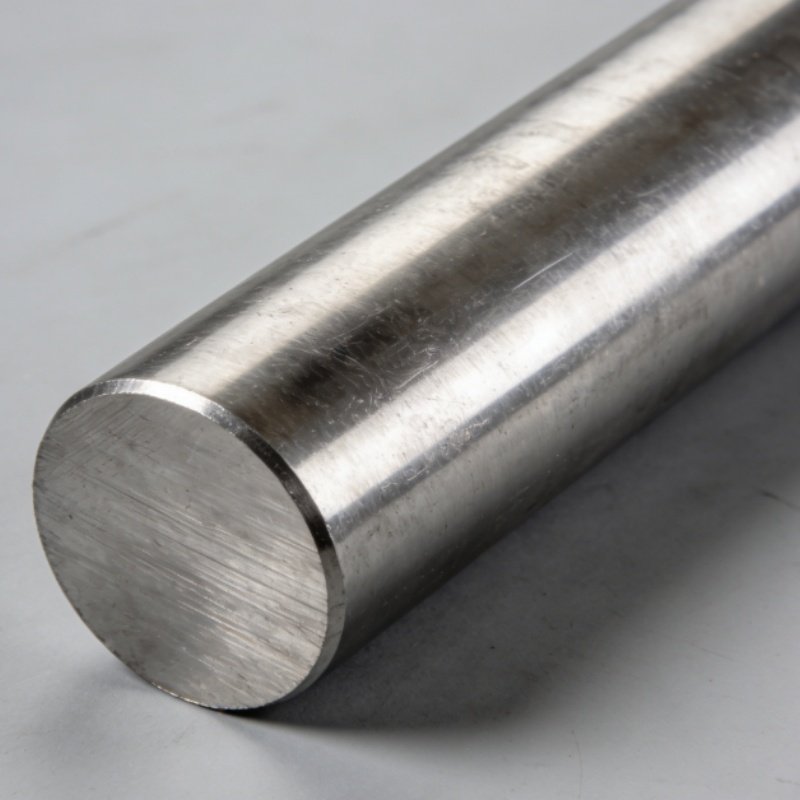
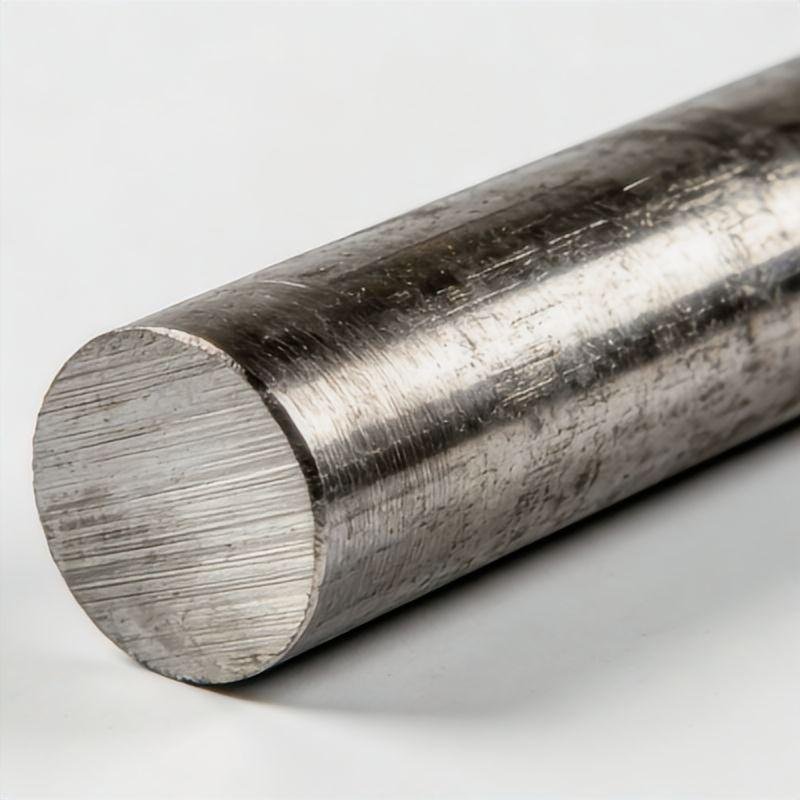
We supply Alloy 62 as cold finished rod to SB-574 Table 3 and as hot or cold finished
solution annealed rod to SB-574 Table 5, in round, hexagonal, square and rectangular
sections. Cold finished rod is supplied in the sizes and the diameter tolerances of
Table 2, and hot or cold finished solution annealed rod to the tolerances of Table 4,
with the note that hot-finished, annealed and descaled rod carries a specific
out-of-roundness allowance.
For solution annealed rod the minimum mechanical properties are 105,000 psi [725 MPa]
tensile with 45,000 psi [310 MPa] yield and 40% elongation. Forging quality material is
furnished to the chemical requirements and to surface inspection only, with no tensile
properties required, since the buyer will perform the final test after their own
machining and heat treatment.
Plate, sheet and strip of the same grade are available to SB-575, and seamless pipe
and tube to SB-622, so a complete Alloy 62 package can be ordered against one material
family. Forged flanges and fittings are produced to SB-462, where the minimum tensile
for this grade is 105 ksi [725 MPa] with 45 ksi [310 MPa] yield and 40% elongation.
Alloy 62 is used in hydrochloric acid production and handling, in sulphuric acid
alkylation and in the halation section of pharmaceutical plants, in brine and
caustic-chloride service, and in the fabrication of reactor internals and column
internals. The tantalum addition improves resistance to reducing acid corrosion and
is particularly useful in equipment that sees a mixture of oxidising and reducing
conditions.
A significant share of this grade is consumed as bar stock by fabricators who turn
it into shafts, fasteners, valve trim and machined components rather than into
wrought pipe. That is why we supply in long lengths to the mill length of Table 4 of
SB-574, and why we can cut to your required length and supply with your reference
numbers on the bar.
Each delivery is accompanied by an EN 10204 3.1 certificate showing the heat number,
the full chemical analysis against SB-574 Table 1, and the tensile test results for the
condition and size supplied. Supplementary services available on request include
ultrasonic examination, hardness testing, and macro or micro examination on the
forging quality product. If your project requires third-party witness of the
mechanical testing, tell us when you order and we will issue the inspection notice for
your inspector in advance so that testing is not delayed on arrival.
For an accurate quotation, please state the grade and UNS number, the section shape
(round, hexagonal, square or rectangular), the nominal dimension and the tolerance you
need, the length or the multiple length, the condition, either cold finished or hot or
cold finished solution annealed, and the quantity. For forging quality material, give
the finished component drawing or weight so we can supply a bar size that suits your
machining allowance. If the material is destined for a specific project or client
inspection regime, state that clearly in the enquiry and we will confirm the
certificate format and the marking before production starts.