Address
304 North Cardinal St.
Dorchester Center, MA 02124
Work Hours
Monday to Friday: 7AM - 7PM
Weekend: 10AM - 5PM
Address
304 North Cardinal St.
Dorchester Center, MA 02124
Work Hours
Monday to Friday: 7AM - 7PM
Weekend: 10AM - 5PM


The table below sets out the governing material specification and the grade comparison for Ni-Fe-Chromium-Molybdenum-Columbium UNS N08700 Plate, Sheet, Bar and Wire. All composition and mechanical values are taken directly from the ASME BPVC Section II specifications named in each row.
| Grade | UNS | Ni, % | Cr, % | Mo, % | Nb, % | C max, % | Heat treatment |
|---|---|---|---|---|---|---|---|
| N08700 | N08700 | 24.0–26.0 | 19.0–23.0 | 4.3–5.0 | 8 × carbon to 0.40 | 0.04 | Solution anneal, 2000 °F (1090 °C) min, rapid cool |
| Incoloy 800 | N08800 | 35.0 min / 39.0 max | 23.0 min / 27.0 max | not specified in SB-599 | not specified in SB-599 | not specified in SB-599 | not specified in SB-599 |
| Incoloy 825 | N08825 | 38.0–46.0 | 19.5–23.5 | 2.5–3.5 | not specified in SB-599 | not specified in SB-599 | not specified in SB-599 |
| Alloy 20 | N08020 | not specified in SB-599 | not specified in SB-599 | not specified in SB-599 | not specified in SB-599 | not specified in SB-599 | not specified in SB-599 |
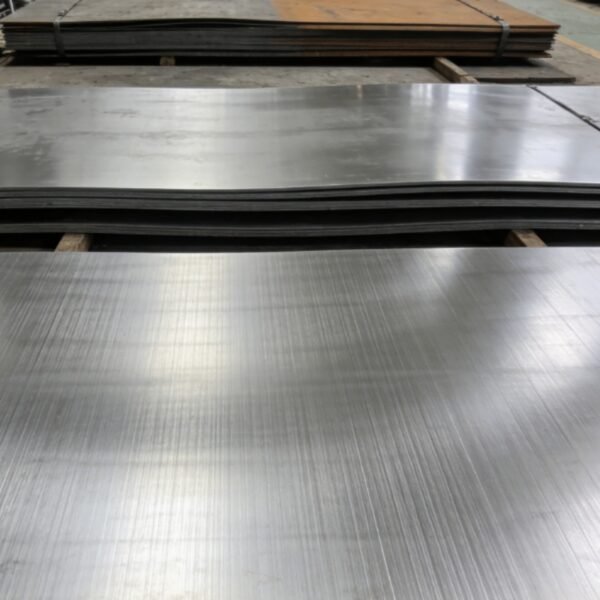
We supply N08700 as plate, sheet and strip to ASME SB-599, and as bar and wire to ASME SB-672. Forged flanges, fittings and valves are produced to ASME SA-182 under grade F700. Cold-drawn round bar and wire in smaller diameters are supplied to SB-672 tolerances, with the additional note that final continuous anneal lots are limited to an 8-hour period or a single furnace load unless otherwise agreed between manufacturer and purchaser. As with all nickel alloy forms, current size and thickness availability is confirmed against stock before quotation.
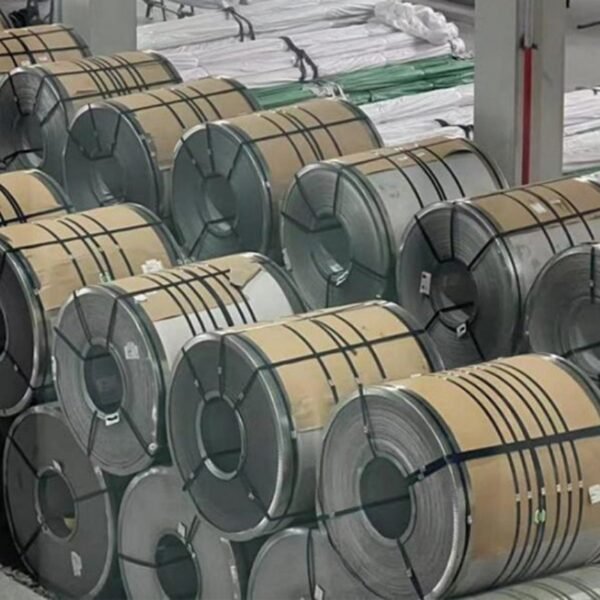
N08700 is a columbium-stabilised nickel-iron-chromium-molybdenum alloy. Columbium binds carbon as stable carbides, which is what allows the alloy to be used at elevated temperature in sulphidising environments without embrittlement. The alloy is delivered in the solution-annealed condition with a recommended minimum anneal of 2000 °F (1090 °C) cooled rapidly to room temperature, and cold rolling or tempering may be applied after that final solution anneal. The typical commercial form is cold-rolled sheet and strip for formed vessel and heat exchanger components.
N08700 sits between Incoloy 800 and Incoloy 825 in nickel content while carrying 4.3–5.0 % molybdenum and about 8 % columbium. Against Incoloy 825 it offers comparable chromium with a different stabilising element, which changes behaviour in sour environments and under sulphidation. Against a plain nickel-iron-chromium grade it adds molybdenum and columbium for chloride and sour service resistance. Where a project calls for a columbium-stabilised nickel alloy with the mechanical properties specified in SB-599 Table 3, N08700 is the standard answer. Grade selection for sour service should be made against the specific H2S partial pressure, chloride content and temperature, and our technical department can support that review.
| Item | Requirement |
|---|---|
| Material specification | ASME SB-599 (plate, sheet and strip), SB-672 (bar and wire) |
| Material designation | Nickel-iron-chromium-molybdenum-columbium stabilised alloy, UNS N08700 |
| Recommended solution anneal | Minimum 2000 °F (1090 °C), cooled rapidly to room temperature |
| Intergranular corrosion test | Material shall be capable of passing; test need not be performed on any lot unless specified on the order. When specified, specimens are sensitised 1 h at 1250 °F (677 °C) and tested per Practice C of Practices A 262, corrosion rate not exceeding 2.5 mils per month (165 mg/dm²·day) |
| Related forging specification | ASME SA-182 includes UNS N08700 as grade F700 for forged flanges, fittings and valves |
| Dimensional tolerances | SB-599 Tables 4–20; SB-672 Tables 4–12 for bar and wire |
Chemical composition shall conform to the applicable ASME specification. The table below reproduces the composition limits for the grades covered by Ni-Fe-Chromium-Molybdenum-Columbium UNS N08700 Plate, Sheet, Bar and Wire.
| Element | Composition, % (SB-599 Table 1) |
|---|---|
| Nickel | 24.0–26.0 |
| Iron | Remainder |
| Chromium | 19.0–23.0 |
| Molybdenum | 4.3–5.0 |
| Columbium | 8 × carbon to 0.40 |
| Carbon, max | 0.04 |
| Silicon, max | 1.00 |
| Manganese, max | 2.00 |
| Phosphorus, max | 0.040 |
| Sulfur, max | 0.030 |
| Copper, max | 0.50 |
| Form (SB-599 Table 3) | Tensile min, ksi (MPa) | Yield min, ksi (MPa) | Elongation min, % | Rockwell hardness |
|---|---|---|---|---|
| Sheet | 80 (550) | 35 (240) | 30 | 75–90 HRB |
| Strip | 80 (550) | 35 (240) | 30 | 75–90 HRB |
| Plate | 80 (550) | 35 (240) | 30 | 75–90 HRB |
| Bar and wire (SB-672 Table 3) | Tensile min, ksi (MPa) | Yield min, ksi (MPa) | Elongation min, % | Reduction of area min, % |
|---|---|---|---|---|
| Annealed, longitudinal | 80 (550) | 35 (240) | 30.0 | 50.0 |
| Annealed, transverse (widths 3 in. and over) | 80 (550) | 35 (240) | 25.0 | 40.0 |
Sour service upgrading — wellhead and Christmas tree components, downhole tools and separator internals where H2S and chloride are present and where the columbium stabilisation supports resistance to embrittlement.
Reformer and hydrotreater internals, catalytic unit components and heat exchanger parts operating with sulphur-bearing feed and high hydrogen partial pressure.
Bleach plant washers, digesters and chemical recovery equipment where sulphur dioxide, chlorine and caustic alternate through the cycle.
Furnace parts, heat exchanger tubes and fabricated components in environments where sulphur-bearing atmospheres attack unprotected nickel-iron-chromium material.
Full analysis to ASME SB-599 Table 1 or SB-672 Table 1 as applicable, with product check analysis tolerances per the relevant specification.
Tensile, yield and elongation per SB-599 Table 3 for sheet, strip and plate, with hardness values for information only and not a basis for acceptance or rejection provided the other mechanical properties are met.
Solution annealed at a minimum of 2000 °F (1090 °C) with rapid cooling to room temperature, and the treatment recorded on the mill test report.
Capable of passing; performed only when specified on the purchase order, in the sensitised condition of 1 h at 1250 °F (677 °C) per Practice C of Practices A 262.
Per the applicable tolerance tables — SB-599 Tables 4–20 for plate, sheet and strip, SB-672 Tables 4–12 for bar and wire.
Mill test report with heat number traceability, and supplementary inspection on request.
Please specify the product form (plate, sheet, strip, bar, wire or SA-182 F700 forgings), dimensions with the applicable tolerance basis, quantity, and the service environment including H2S partial pressure, chloride content and operating temperature. We will confirm current availability, the material route and the mill source, and issue a quotation on request. If intergranular corrosion testing, a specific surface condition or third-party inspection is required, state this with the enquiry so it is included in the order.