Address
304 North Cardinal St.
Dorchester Center, MA 02124
Work Hours
Monday to Friday: 7AM - 7PM
Weekend: 10AM - 5PM
Address
304 North Cardinal St.
Dorchester Center, MA 02124
Work Hours
Monday to Friday: 7AM - 7PM
Weekend: 10AM - 5PM

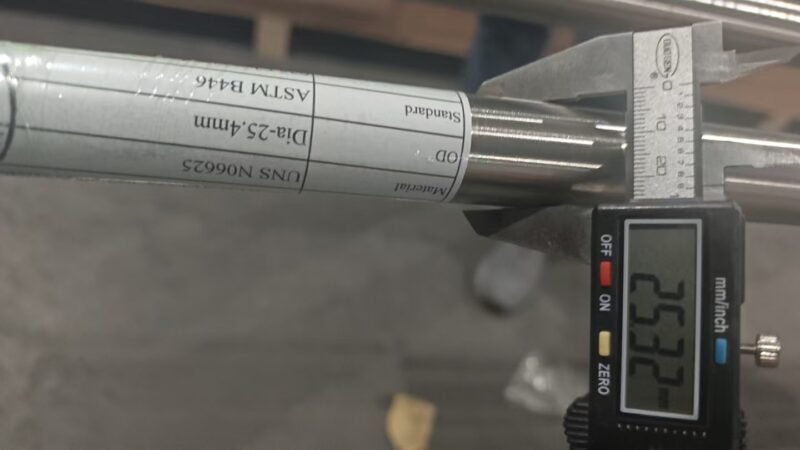
Grade 660, grade 662, grade 651, grade 665 and grade 670: the numbers
on the ASME bolting specifications are easier to decode than the trade
names, and the trade name that matters here is A286. A286 is the
iron-nickel-chromium precipitation hardening alloy behind high temperature
valve bodies, bolting and forged rings, and it is specified in two
places: ASME SA-638 for bars, forgings and forging
stock, and ASME SA-453 for the bolting itself. If you
write only one of them on the order you are specifying the material but
not the product.
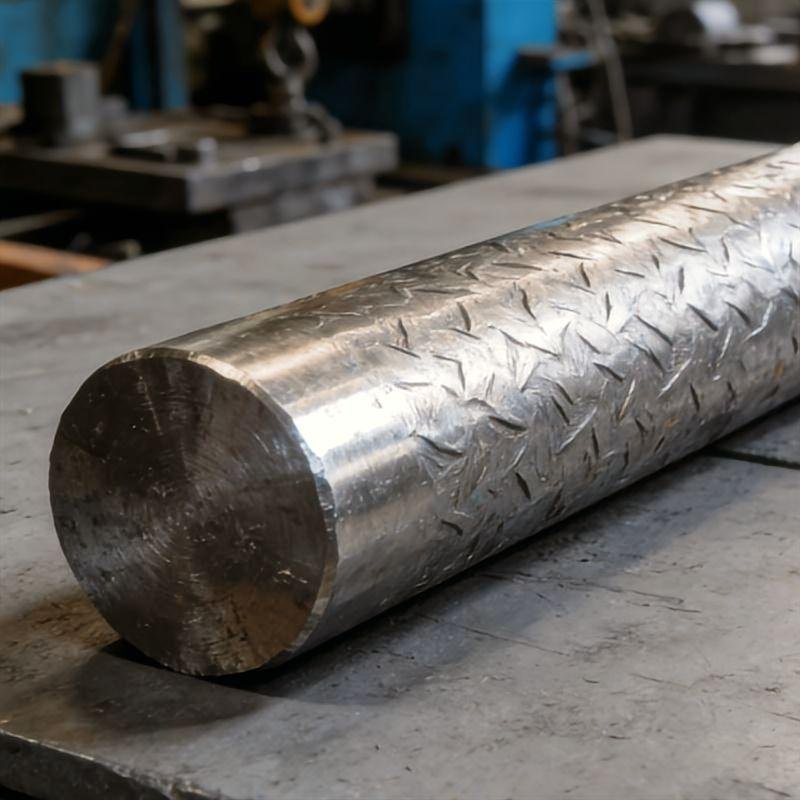
SA-453 Table 3 maps the bolting grades to their UNS numbers and sets
the chemistry. A286 is grade 660.
| Element | Grade 660 (S66286) | Grade 662 (S66220) | Grade 651 (S63198) |
|---|---|---|---|
| Carbon, wt pct max | 0.08 | 0.08 | 0.28 to 0.35 |
| Chromium, wt pct | 13.5 to 16.0 | 12.0 to 15.0 | 18.0 to 21.0 |
| Nickel, wt pct | 24.0 to 27.0 | 24.0 to 28.0 | 8.0 to 11.0 |
| Molybdenum, wt pct | 1.00 to 1.50 | 2.50 to 3.50 | 1.00 to 1.75 |
| Titanium, wt pct | 1.90 to 2.35 | 1.55 to 2.00 | 0.10 to 0.35 |
| Columbium, wt pct | not required | not required | 0.25 to 0.60 |
| Vanadium, wt pct | 0.10 to 0.50 | not required | not required |
| Boron, wt pct | 0.001 to 0.010 | not required | not required |
| Aluminium, wt pct max | 0.35 | 0.35 | not required |
SA-453 covers five grades of bolting material with twelve classes of
yield strength ranging from 50 to 120 ksi, and its scope states that the
material requires special processing and is not intended for general
purpose applications. SA-638 Table 4 gives the same grade 660 chemistry
with the addition of a boron limit of 0.0010 to 0.0100 percent for the
wrought bar and forging forms.
SA-638 Table 1 sets the tensile requirements, Table 2 the
stress-rupture requirements, and Table 3 the heat treatment. A286 is
supplied solution plus precipitation hardened, and the two solution
treatments give different results.
| Property | Grade 660 bars | Grade 662 bars | Grade 662 forgings |
|---|---|---|---|
| Tensile strength, min, psi [MPa] | 130 000 [895] | 130 000 [895] | 125 000 [860] |
| Yield strength, min, psi [MPa] | 85 000 [585] | 85 000 [585] | 80 000 [550] |
| Elongation in 4D, min, pct | 15 | 15 | 15 |
| Reduction of area, min, pct | 18 | 18 | 18 |
| Brinell hardness, min | 248 | 248 | 248 |
Type 1 solution treatment is 1650 plus or minus 25 F (900 plus or
minus 15 C) held 2 hours, oil or water quenched, then aged at 1300 to
1400 F (705 to 760 C) for 16 hours. Type 2 raises the solution treatment
to 1800 plus or minus 25 F (980 plus or minus 15 C) held 1 hour, with the
same ageing cycle. Stress rupture in SA-638 Table 2 is rated at 1200 F
(650 C) for 23 hours at 65 000 psi (450 MPa) for grade 660.
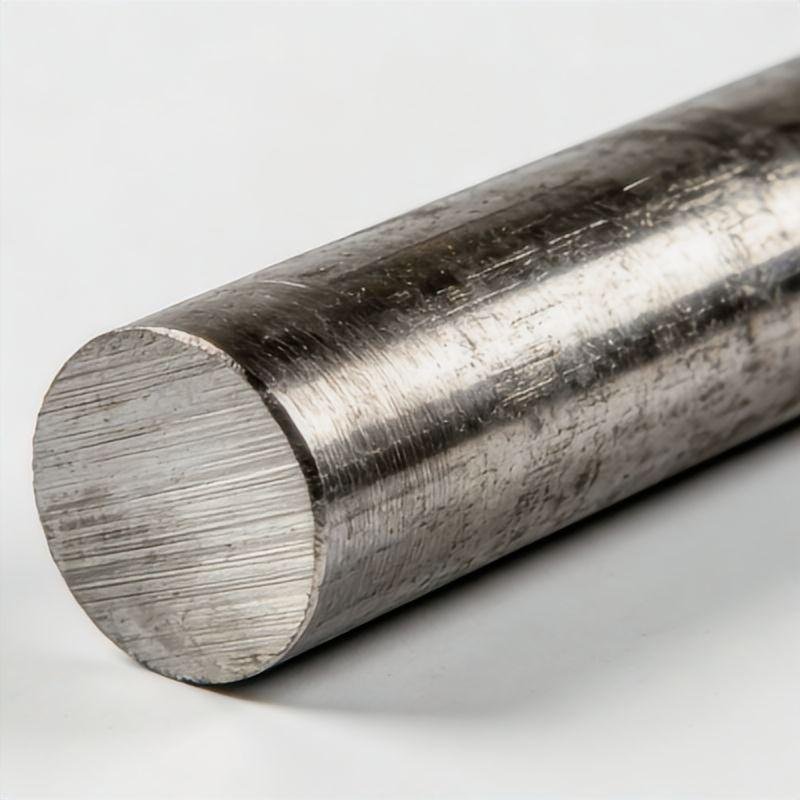
Send the grade and UNS number, whether the product is bar, forging or
forging stock, the diameter or distance between parallel surfaces, the
length, and the heat treatment type. SA-453 sets continuous heat
treatment charge sizes to 13/4 in (44 mm) at 3000 lb (1400 kg) and
12000 lb (5400 kg) above 21/2 in (63 mm), with lot sizes limited by
diameter. Our nickel alloy high temperature bolting
listing covers the finished bolting, and the
fasteners category page groups the standard
fastener forms.
Steam turbine and boiler bolting, high temperature valve bodies and
trim, and nuclear reactor internals. Compared with
Inconel 718 high temperature bolt stock, A286 carries
more iron and less nickel, which is why it wins on cost at moderate
strength and loses where maximum creep resistance is the driver.
Material is supplied with an EN 10204 3.1 certificate stating
compliance with SA-638 or SA-453 as applicable. Bars 2 in (50 mm) and
over require one hardness test on each mill-treated length; bars under
2 in require a test on at least 10 percent of mill-treated lengths.
Third party inspection and full heat traceability can be arranged. If the
drawing quotes a trade name rather than a UNS designation, the
nickel alloy grade cross reference by UNS and trade name
guide settles the equivalence before the enquiry is issued.