Address
304 North Cardinal St.
Dorchester Center, MA 02124
Work Hours
Monday to Friday: 7AM - 7PM
Weekend: 10AM - 5PM
Address
304 North Cardinal St.
Dorchester Center, MA 02124
Work Hours
Monday to Friday: 7AM - 7PM
Weekend: 10AM - 5PM

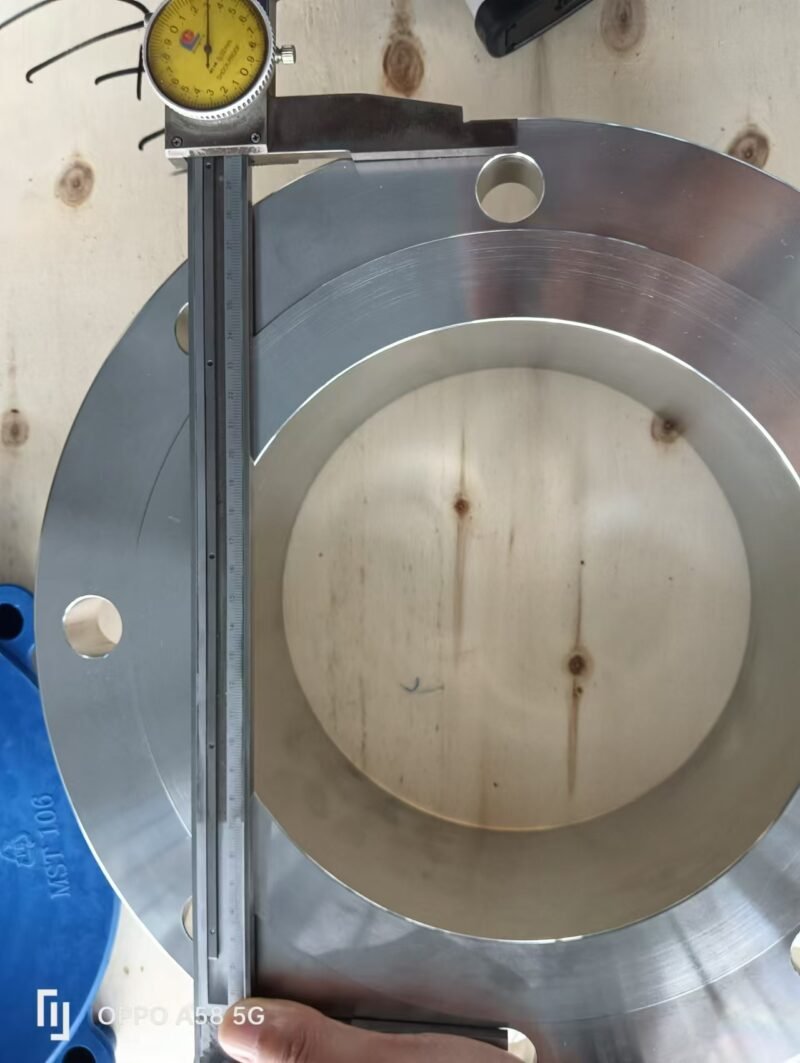
SA-182 F700 forged pipe flanges in UNS N08700 nickel iron chromium molybdenum columbium alloy. B16.5 and B16.47 dimensions, EN 10204 3.1 certification, full traceability.
One grade in ASME SA-182 carries a columbium addition and almost nothing else: F700, UNS N08700. It is a nickel-iron-chromium-molybdenum alloy, and the columbium is added in a controlled quantity tied to the carbon content, which is what gives it its resistance to sulphuric acid cracking without the strength penalty a higher alloying addition would bring. For a buyer who works in sour oilfield or sulphuric acid service and has been told that “825 is close enough”, F700 is worth a serious look, because it is the specification that actually covers this composition.
The values below are taken directly from ASME SA-182 Table 2 for grade F700. Note the columbium entry: the requirement is tied to the carbon content rather than a fixed number.
| Element | F700 (UNS N08700) |
|---|---|
| Carbon, max % | 0.04 |
| Manganese, max % | 2.00 |
| Phosphorus, max % | 0.040 |
| Sulfur, max % | 0.030 |
| Silicon, max % | 1.00 |
| Nickel, % | 24.0–26.0 |
| Chromium, % | 19.0–23.0 |
| Molybdenum, % | 4.3–5.0 |
| Columbium (Nb), min % | 8 × carbon, min |
| Columbium (Nb), max % | 0.40 |
| Copper, max % | 0.50 |
The carbon ceiling of 0.04 percent is unusually tight for a wrought nickel alloy, and it is the reason the minimum columbium figure comes out at 0.32 percent. Because columbium is a carbide former, this combination lets the alloy pick up carbon from the environment without precipitating the chromium carbides that drive sensitisation. That is the mechanism behind its performance in reducing acid, and it is why the same grade is specified for the weld overlay and forging layers of sour service equipment.
SA-182 Table 1 requires F700 to be solution treated and quenched at 2025 to 2100 °F, or 1107 to 1149 °C, with liquid quenching or rapid cooling. Table 3 then sets the following minimums.
| Property | F700 (UNS N08700) |
|---|---|
| Tensile strength, min ksi [MPa] | 80 [550] |
| Yield strength, min ksi [MPa] | 35 [240] |
| Elongation in 2 in. [50 mm] or 4D, min % | 30 |
| Brinell hardness, max HBW | 192 |
The same alloy is available in plate, sheet and bar form under other specifications. Our N08700 plate, sheet and bar page covers those forms, and the comparison between forging and wrought product requirements is a frequent source of confusion on mixed-material packages.
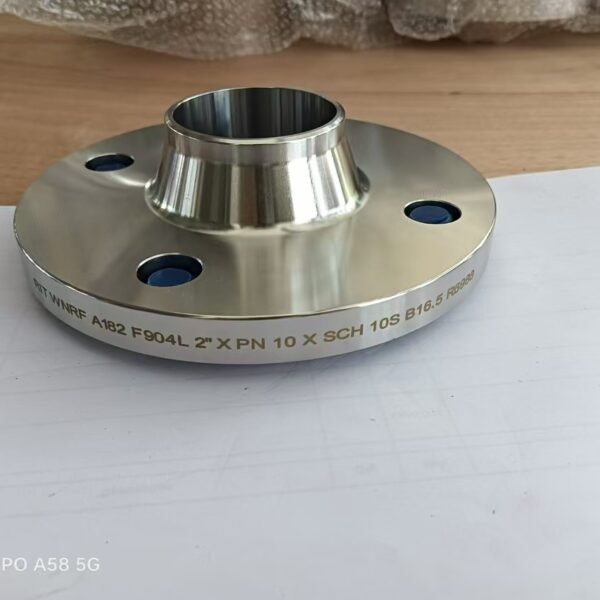
We supply F700 as forged pipe flanges and forged fittings. Flanges are manufactured to ASME B16.5 up to NPS 24 and to ASME B16.47 for larger series, with raised face, flat face and ring type joint options. Fittings are supplied to ASME B16.9 for butt weld forms and to ASME B16.11 for socket weld and threaded forms. Standard items include weld neck, slip-on, threaded and blind flanges, plus forged elbows, reducers, tees and caps.
Two application families dominate. The first is sour oil and gas gathering, transmission and processing equipment, where F700 is used in place of conventional stainless where the hydrogen chloride content and the partial pressure of hydrogen sulphide make standard austenitic grades unsuitable. The second is sulphuric and phosphoric acid plant, where the columbium-stabilised low-carbon structure resists the intergranular attack that destabilises higher-carbon nickel alloys. Our sour service oil and gas gathering fittings and flanges material selection article covers that selection logic in detail, and the nickel alloy service condition selection guide is worth reading before a grade is fixed.
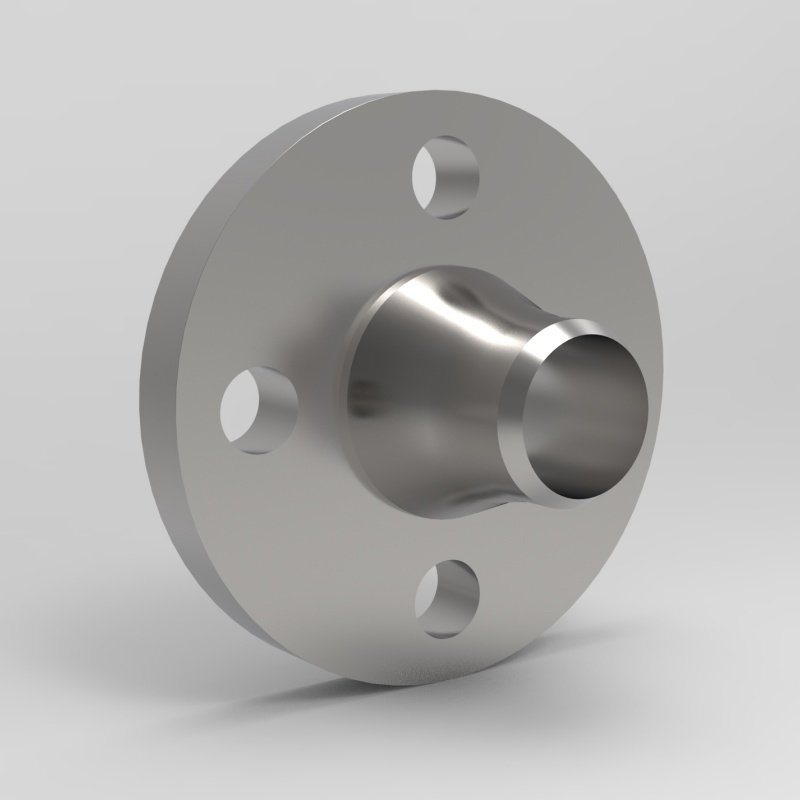
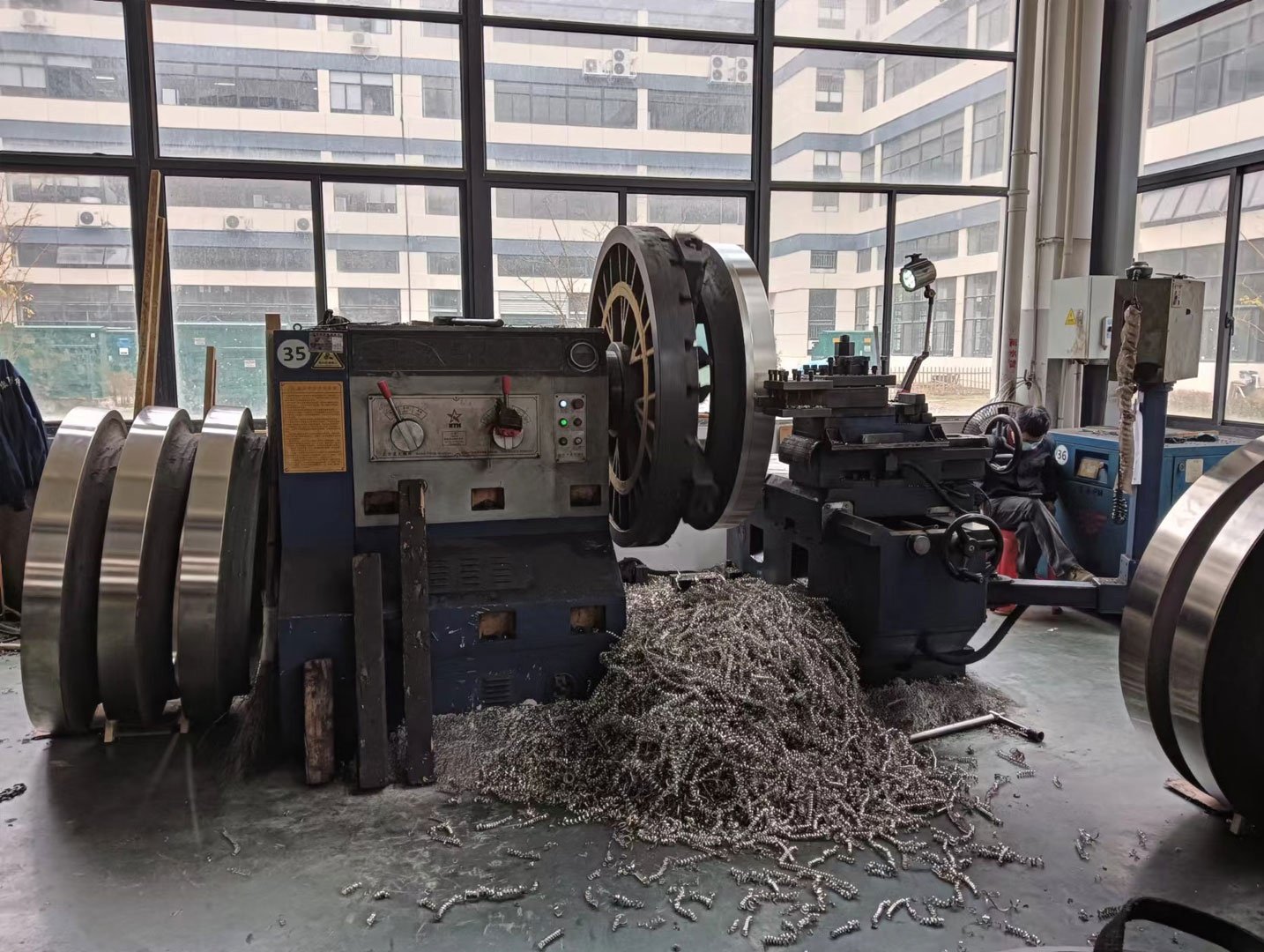
Every F700 forging is heat treated with the actual temperature and quench medium recorded, mechanically tested against the SA-182 Table 3 minimums, and dimensionally inspected to the applicable dimensional standard. Material test reports are issued to EN 10204 3.1 as standard, and positive material identification is applied to each piece. Supplementary requirements including impact testing, hardness testing and third-party inspection can be added on the purchase order.
Please include grade, nominal size, pressure class, face type, quantity and certification requirement in your enquiry. If your project calls for F700 specifically, note that material availability in plate, bar and forging forms is not always the same, so the earlier the enquiry reaches us the more options we can offer on delivery. We will confirm the applicable dimensional standard and the exact heat treatment route in the quotation.
Related reading includes the ASME B16.5 vs B16.47 flange standard size boundary article, which explains where the dimensional standard changes, and our full nickel alloy forged flanges and fittings category.