Address
304 North Cardinal St.
Dorchester Center, MA 02124
Work Hours
Monday to Friday: 7AM - 7PM
Weekend: 10AM - 5PM
Address
304 North Cardinal St.
Dorchester Center, MA 02124
Work Hours
Monday to Friday: 7AM - 7PM
Weekend: 10AM - 5PM

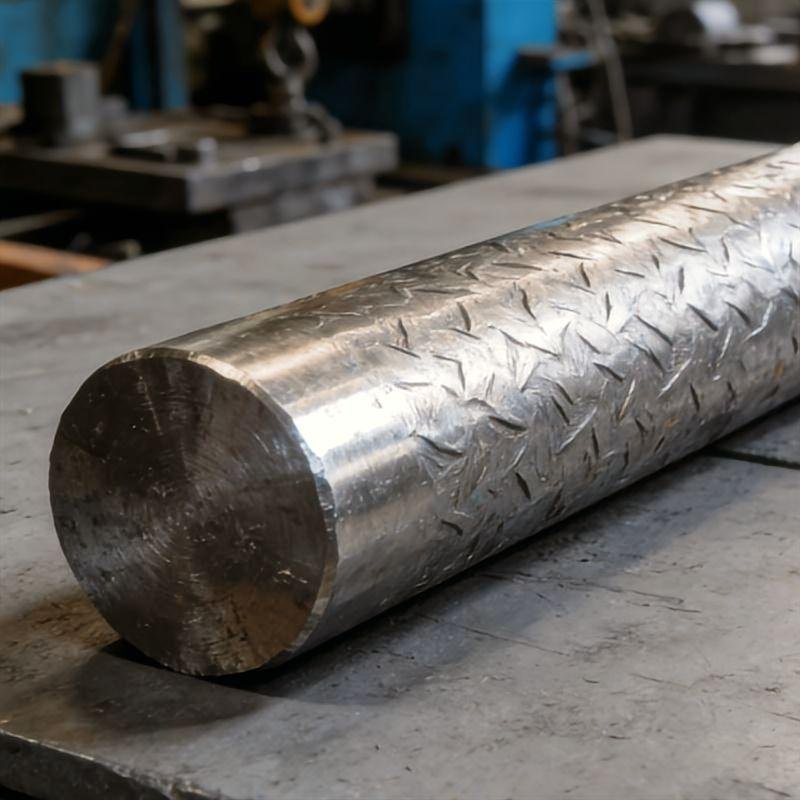
Aluminum bronze rod, bar and shapes to ASME SB-150. Ten grades incl. C63000 naval bronze and C64200. Cu 74.5 min, Al 9.0-11.0. Stock and cut-to-size.
Aluminum bronze is a copper-based alloy family where aluminum is the principal alloying element. Under ASME SB-150 it is supplied as rod, bar and shapes across ten UNS designations, and it is one of the few non-nickel-alloy families we carry in quantity because it answers a real demand in seawater, valve and instrument work. This page covers the grade range, the composition and tensile differences that matter when you choose between them, and how to order.
Aluminum bronze alloys combine the corrosion resistance and strength of aluminum with the workability and thermal conductivity of copper. They are specified in seawater and brackish water service, in valve components, pump shafts, marine hardware, heat-exchanger and condenser components, and in instrument and control hardware. Because aluminum forms a tenacious oxide film, the grades that sit in the middle of the range hold up in flowing seawater far better than plain copper or brass.
Resistance to dezincification and to chloride pitting improves as aluminium and, in the higher grades, nickel or manganese content increases. Where the service is quiet or stagnant seawater, a lower grade may suffice; where it is flowing or erosive, specify a grade with more alloying content.
| Grade | UNS | Al, % | Cu, % | Fe, % | Ni, % | Common description |
|---|---|---|---|---|---|---|
| Aluminum bronze 61300 | C61300 | 6.0 – 7.5 | Remainder | 2.0 – 3.0 | 0.15 max | Moderate strength, castable |
| Aluminum bronze 61400 | C61400 | 6.0 – 8.0 | Remainder | 1.5 – 3.5 | Not specified | General purpose, weldable |
| Aluminum bronze 61900 | C61900 | 8.5 – 10.0 | Remainder | 3.0 – 4.5 | 1.0 max | High strength rod |
| Aluminum bronze 62300 | C62300 | 8.5 – 10.0 | Remainder | 2.0 – 4.0 | Not specified | Higher strength, Mn bearing |
| Naval bronze 62400 | C62400 | 10.0 – 11.5 | Remainder | 2.0 – 4.5 | Not specified | High strength, weldable |
| Naval bronze 63000 | C63000 | 9.0 – 11.0 | 74.5 min | 2.0 – 4.0 | 4.0 – 5.5 | Seawater, valve trim |
| Naval bronze 63020 | C63020 | 10.0 – 11.0 | 74.5 min | 4.0 – 5.5 | 4.2 – 6.0 | Higher Fe, cast valve bodies |
| Aluminum bronze 63200 | C63200 | 8.7 – 9.5 | 74.5 min | 3.5 – 4.3 | 4.0 – 4.8 | Mn bearing naval bronze |
| Aluminum bronze 64200 | C64200 | 6.3 – 7.6 | Remainder | 0.30 max | 0.25 max | Low iron, machining stock |
| Aluminum bronze 64210 | C64210 | 6.3 – 7.0 | Remainder | 0.30 max | 0.25 max | Silicon bearing, welding rod |
For seawater service the usual choice is C63000 or C63200, where the 4 to 6 % nickel content combined with aluminum gives reliable erosion and corrosion performance. C62400 is the high-strength grade for shafts and fasteners where higher hardness is needed. C64200 and C64210 are distinguished by very low iron and are preferred where the part is machined and iron content affects machinability or weld filler behaviour.
| Element | C61300 | C61400 | C61900 | C62300 |
|---|---|---|---|---|
| Aluminum, % | 6.0 – 7.5 | 6.0 – 8.0 | 8.5 – 10.0 | 8.5 – 10.0 |
| Copper, incl silver, % | Remainder | Remainder | Remainder | Remainder |
| Iron, % | 2.0 – 3.0 | 1.5 – 3.5 | 3.0 – 4.5 | 2.0 – 4.0 |
| Nickel incl cobalt, % | 0.15 max | Not specified | 1.0 max | Not specified |
| Manganese, max % | 0.20 | 1.0 | Not specified | 0.50 |
| Tin, % | 0.20 – 0.50 | Not specified | 0.6 max | 0.6 max |
| Zinc, max % | 0.10 | 0.20 | 0.8 | Not specified |
| Element | C62400 | C63000 | C63020 | C64200 | C64210 |
|---|---|---|---|---|---|
| Aluminum, % | 10.0 – 11.5 | 9.0 – 11.0 | 10.0 – 11.0 | 6.3 – 7.6 | 6.3 – 7.0 |
| Copper, incl silver, % | Remainder | 74.5 min | 74.5 min | Remainder | Remainder |
| Iron, % | 2.0 – 4.5 | 2.0 – 4.0 | 4.0 – 5.5 | 0.30 max | 0.30 max |
| Nickel incl cobalt, % | Not specified | 4.0 – 5.5 | 4.2 – 6.0 | 0.25 max | 0.25 max |
| Manganese, max % | 0.30 | 1.5 | 1.5 | 0.10 | 0.10 |
For C61300, iron content shall not exceed nickel content. For C63200 the iron figure is a range of 3.5 to 4.3 %. When the product is for subsequent welding applications and so specified by the purchaser, the residual element limits apply as noted in Table 1.
SB-150 Table 2 gives tensile requirements by temper, product form and size. Typical annealed or drawn values illustrate how the grades differ in achievable strength:
| Grade | Condition | Size, in. (mm) | Tensile, min, ksi (MPa) |
|---|---|---|---|
| C61300 | HR50 drawn and stress relieved | 1/2 (12) and under | 80 (550) |
| C61300 | HR50 drawn and stress relieved | Over 2 (50) to 3 (80), incl | 70 (485) |
| C61400 | HR50 drawn and stress relieved | 1/2 (12) and under | 80 (550) |
| C61900 | HR50 drawn and stress relieved | 1/2 (12) and under | 90 (620) |
| C61900 | HR50 drawn and stress relieved | Over 2 (50) to 3 (80), incl | 78 (540) |
| C62300 | HR50 drawn and stress relieved | 1/2 (12) and under | 90 (620) |
| C62300 | HR50 drawn and stress relieved | Over 2 (50) to 3 (80), incl | 76 (525) |
| C62400 | O20 hot forged and annealed | Shapes, all sizes | 75 (515) |
Note the systematic drop in required strength as diameter increases: for any given grade, the smallest section carries the highest minimum because large sections are harder to work. Conditions M20 as hot rolled, M30 as hot extruded, O30 hot extruded and annealed, and O25 hot rolled and annealed are also defined in the specification.
| Product | Specification |
|---|---|
| Rod, bar, shapes | ASME SB-150 |
| Sand castings | ASME SB-148 |
| Seamless pipe and tube | ASME SB-466 |
| Welded pipe | ASME SB-467 |
Standard mill test certification includes chemical analysis, tensile results, hardness, dimensions and heat number. For valve and seawater applications we can supply eddy-current or ultrasonic testing, and full material traceability. Intergranular and dezincification resistance can be verified on request. Third-party inspection by SGS, BV, TUV or Lloyd’s is welcome; please name the inspection body in your inquiry.
Please include the following in your inquiry:
Send your sizes and quantities and we will return pricing, calculated weight and lead time. If you need a grade or form outside the SB-150 range, describe the application and we will confirm the closest correct route.
Related ranges: dimensional and standards background for this product is set out in our Hastelloy fittings. See also our Round Bars. Ratings and dimensions follow the same specification set.